
 Author: navidcod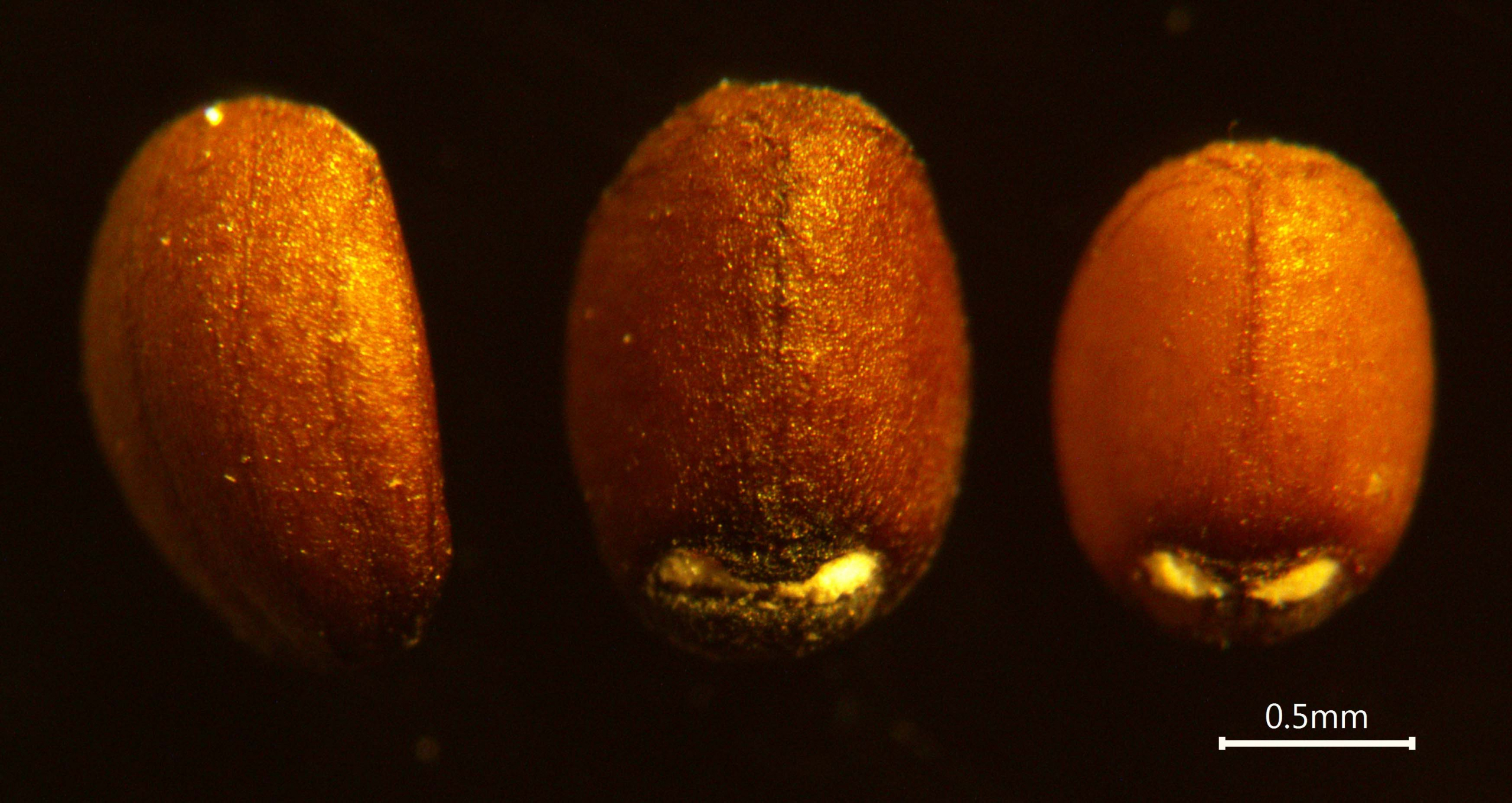
Nepeta cataria L.
Parvin Salehi Shanjani, Mohsen Nasiri, Masoumeh Remezani Yeganeh and Seyed Esmael Seyedian
Natural Resources Gene Bank, Research Institute of Forests and Rangelands, Agricultural Research, Education and Extension Organization, Tehran, Iran.
Uploaded at August 2021
Scientific editors: Valiullah Mozaffarian and Masoumeh Izadpanah
Storage
The storage behavior of this species is orthodox (desiccation-tolerant seeds); dry to 15-20% eRH and store at -20°C.
Germination requirements
The seeds of this species are dormant. Sterilize seeds before placing them on wet germination paper. Then germinate under an alternating temperature regime of 15/20ºC (the higher temperature for 16 hours of light and the lower one for 8 hours of dark).
Morphology
Fruit: Nut
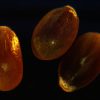
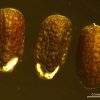
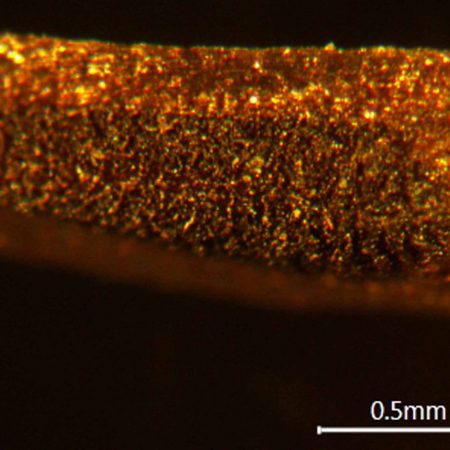
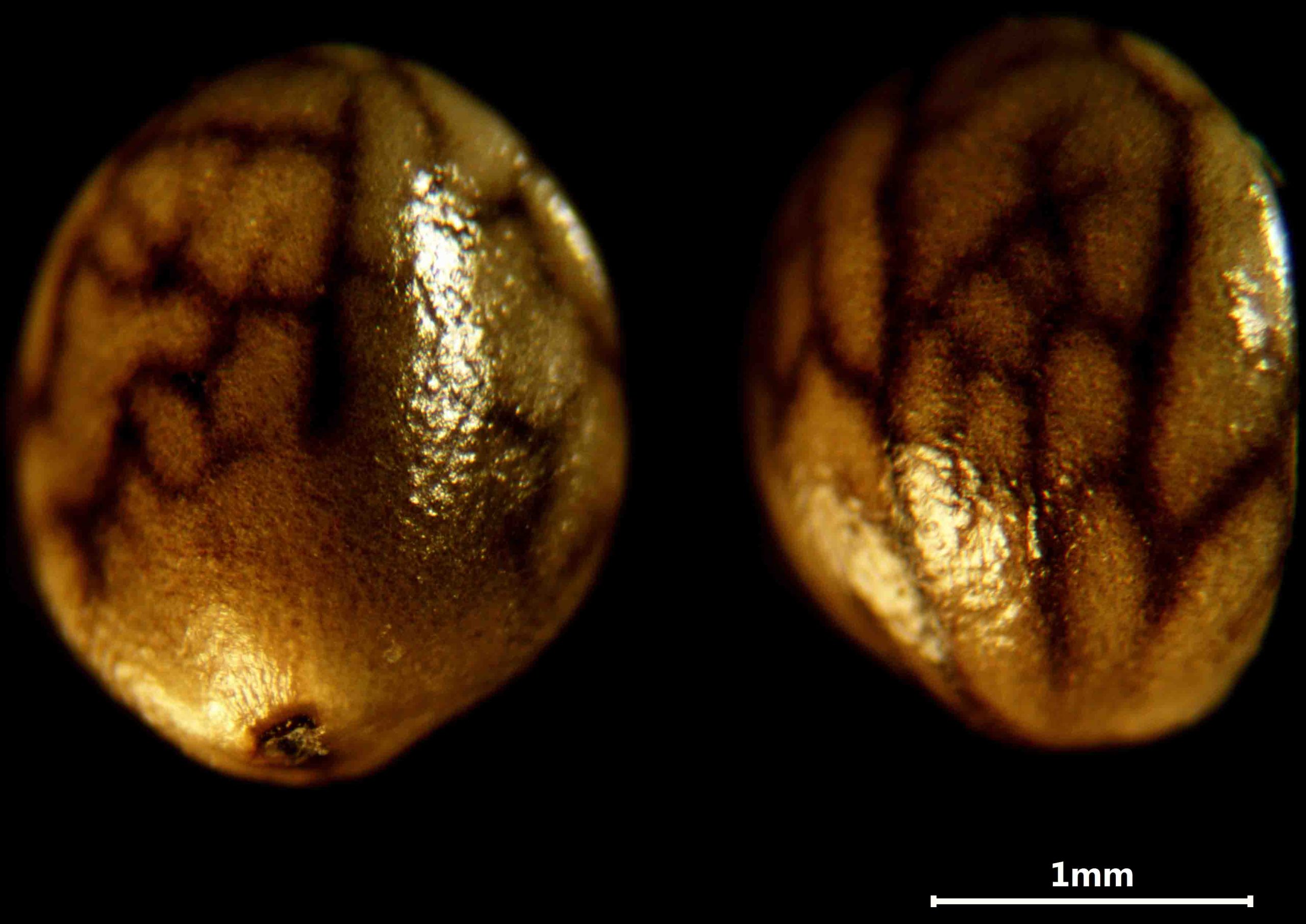
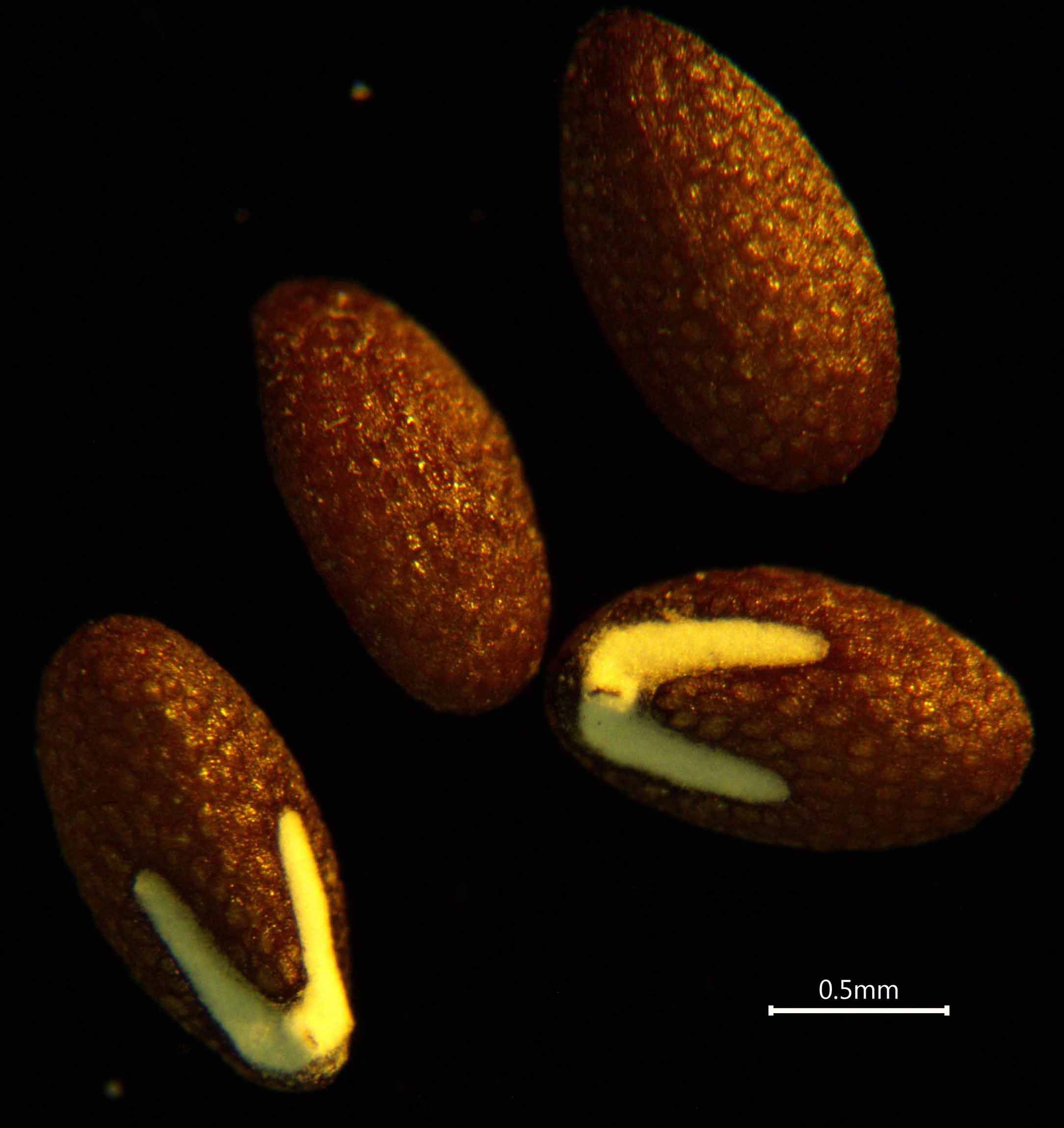
Seed: Nutlets ovate to elliptic, dorsal side convex, ventral side slightly convex with distinct rib, areole (whitish hilum at the base) straight, bi-lobed. Surface obsoletely reticulate, dull, dark-brown.
Seed size: Length: 1.3-1.8 mm, width: 1-1.2 mm in an accession from Taft, Yazd with 1000 seed weight 0.9 g, which was collected in 2006 by Arabzadeh, and the cultivated sample was identified by Ziba Jamehzad with accession number 21094
1000 seed weight: 0.9 g.
Biological features
Life form: Perennial, stems erect, unbranched, or branched at the upper parts.
Inflorescence and flower type and pollination mechanisms: Inflorescence verticillaster. Flowers hermaphrodite, zygomorphic, corolla white purple-spotted, 12-15 mm long. Plant monoecious. cross-pollinate. Pollination is carried out by insects.
Flowering period: Summer
Time of seed ripening: August to October
Seed dispersal methods: The seeds are displaced by weight.
Geographical distribution: Europe, Turkey, Iran, Afghanistan, Pakistan, Iraq. Typus from Taft, Yazd.
Distribution in Iran: In North, North West, West and center.
Mazandaran, Gilan, Azarbaijan, Kurdistan, Lorestan, Yazd, Fars, Hormozgan, Semnan, Tehran.
Taxonomy
Family: Lamiaceae
Subfamily: Nepetoideae
Genus: Nepeta
Species: cataria
Common name: Catmint
References and Links:
Bojňanský, V. and Fargašová, A. 2007. Atlas of seeds and fruits of central and East-European flora: the region of the Carpathian Mountains. Springer, Dordrecht, the Netherlands, 1046 pp.
Ghahraman, A. Flore of Iran. Research Institute of Forests and Rangelands with the university of Tehran publication. https://floraofiran.net/index.php.
Harrington, J.F. 1972. Seed storage and longevity. In: Seed Biology. Vol. III. T. Kozlowski (Ed.). Academic Press, New York, 145-245.
Hassan, T. and Dar, G. H. 2012. Nutlet micromorphology in selected species of Nepeta L. (Lamiaceae) in Kashmir Himalaya. Iranian Journal of Botany, 2: 262-269.
Jamzad, Z. 1391. Flora of Iran, No. 76: Lamiaceae. Agricultural Research, Education and Promotion Organization, Research Institute for Forests and Rangelands of Iran, Tehran, 1066 p.
Jamzad, Z., Ingrouille, M and Simmonds, M. 2003. Three new species of Nepeta (Lamiaceae) from Iran. Taxon, 52: 93-98.
Kaya, A. and Dirmenci, T. 2008. Nutlet surface micromorphology of the genus Nepeta L. (Lamiaceae) in Turkey. Turkish Journal of Botany, 32. 103-112.
Mozaffarian, V. 2012. A Pictorial Dictionary of Botany. Farhang Moaser publisher, 1088 pp.
Mozaffarian, V.A. 1998. Dictionary of Iranian Plants Names. Moaser Publisher, Tehran Farhang, 671 pp.
Naghibi, F. 2005. Labiatae family in folk medicine in Iran from ethnobotany to pharmacology. Iranian Journal of Pharmaceutical Research, 2: 63-79.
Sharma, O.P. 2009. Plant taxonomy 2E. Tata McGraw-Hill Education, New Delhi, 563 pp.