
 Author: navidcod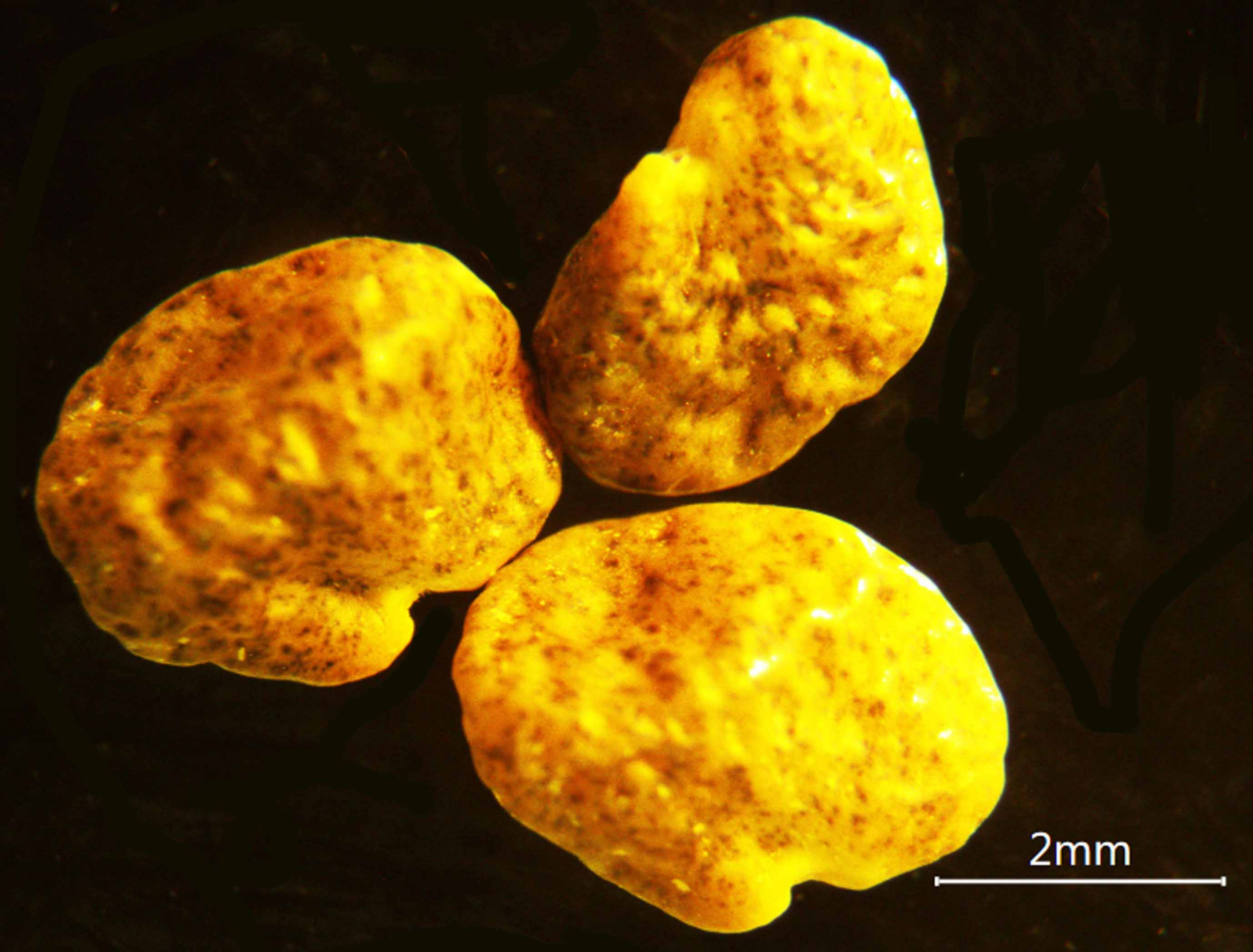
Astragalus schmalhausenii Bunge.
Hamideh Javadi and Parvin Salehi Shanjani
Natural Resources Gene Bank, Research Institute of Forests and Rangelands, Agricultural Research, Education and Extension Organization, Tehran, Iran.
Uploaded at August 2021
Scientific editors: Valiollah Mozaffarian and Masoumeh Izadpanah
Seed Storage
The storage behavior of this species is orthodox (desiccation-tolerant seeds); dry to 15-20% eRH and store at -20 °C.
Germination requirements
The seeds have physical-physiological dormancy and this is related to seed coat and inhibitors. To remove the seed coat, different methods of scarification can be used (sandpaper, sulfuric acid, hot water, etc.). To break dormancy, stratification with pre-chilling (for 14 days), ultrasonic waves, and hormones (Gibberellic acid 100 ppm) are efficient. The best method for breaking dormancy is rubbing the seeds with sandpaper and moist chilling (14 days at 4 °C). Then germinate under a constant temperature of 20 ºC or alternating temperature 25 ºC (16 hours of light) and 15 ºC (8 hours of dark).
Morphology
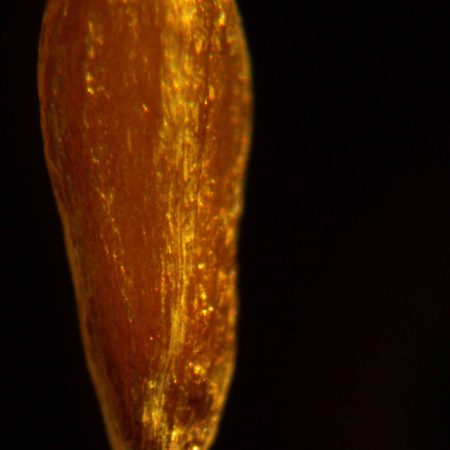
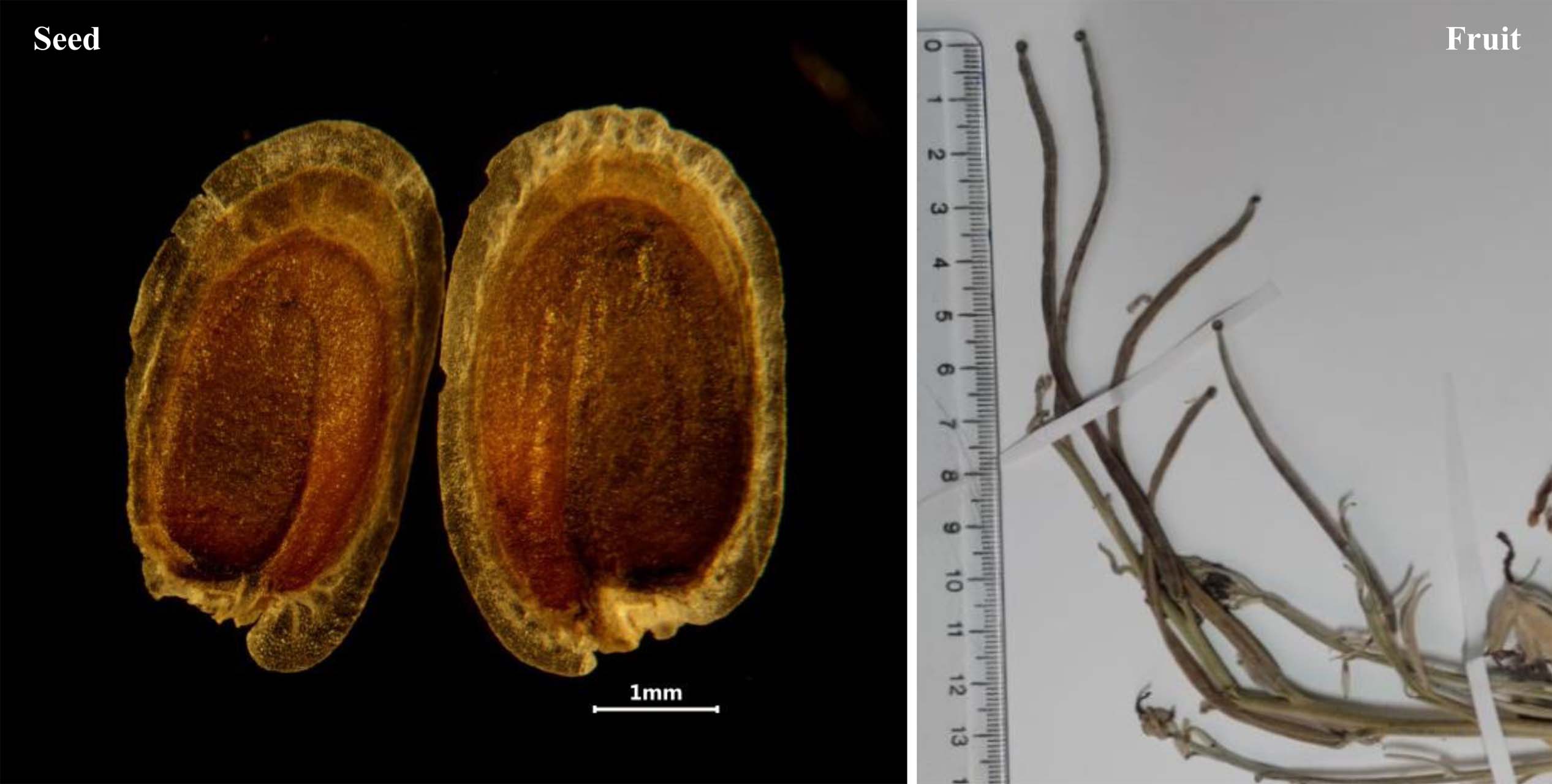
Fruit: Pod, 2-locular, 2 seeded, wide oval, sessile, glabrous, tip recurved or erect.
Fruit size: Length: 8-12 mm, width: 5-6 mm.
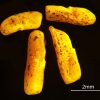
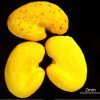
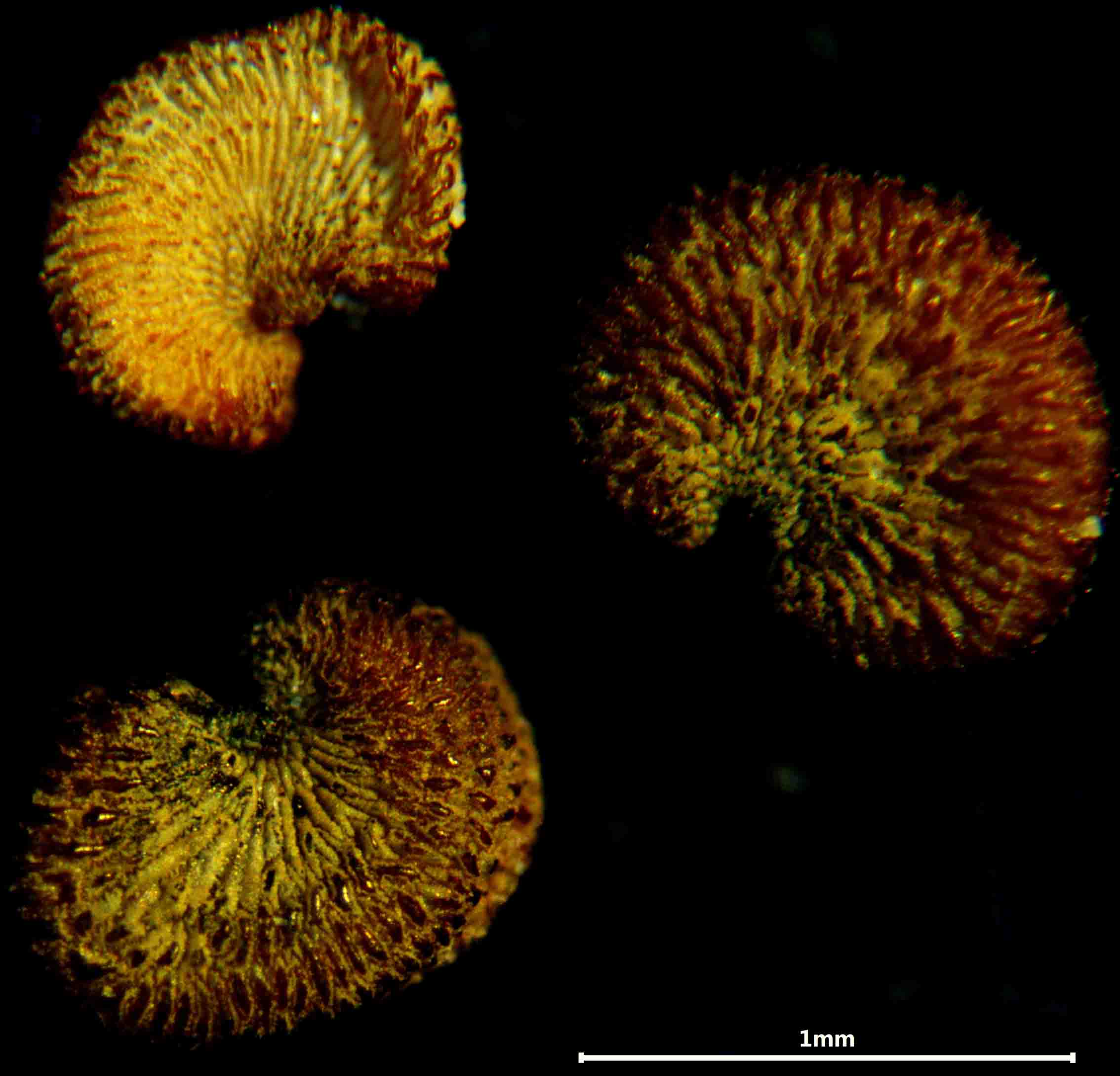
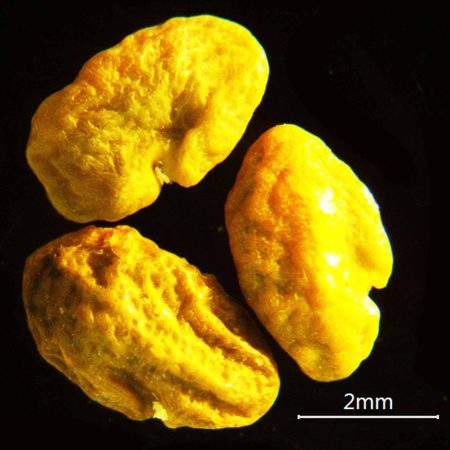
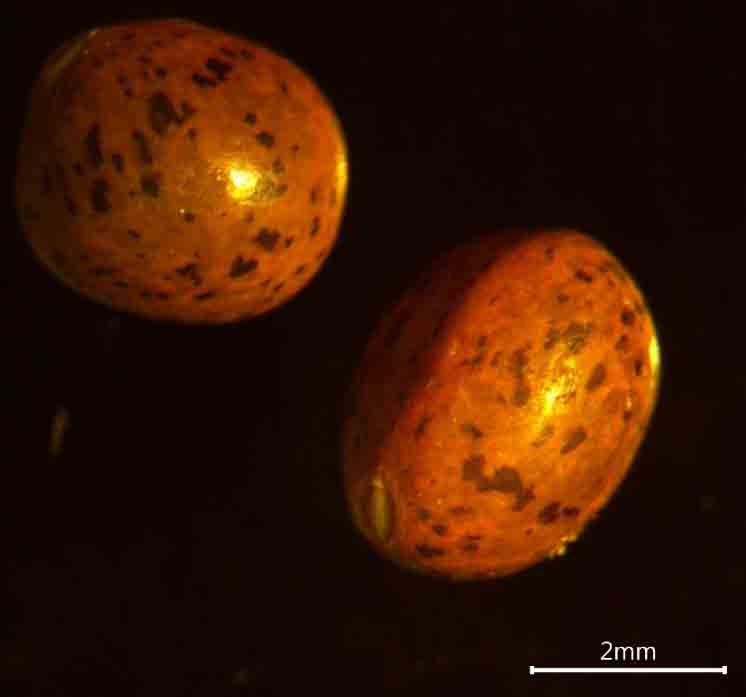
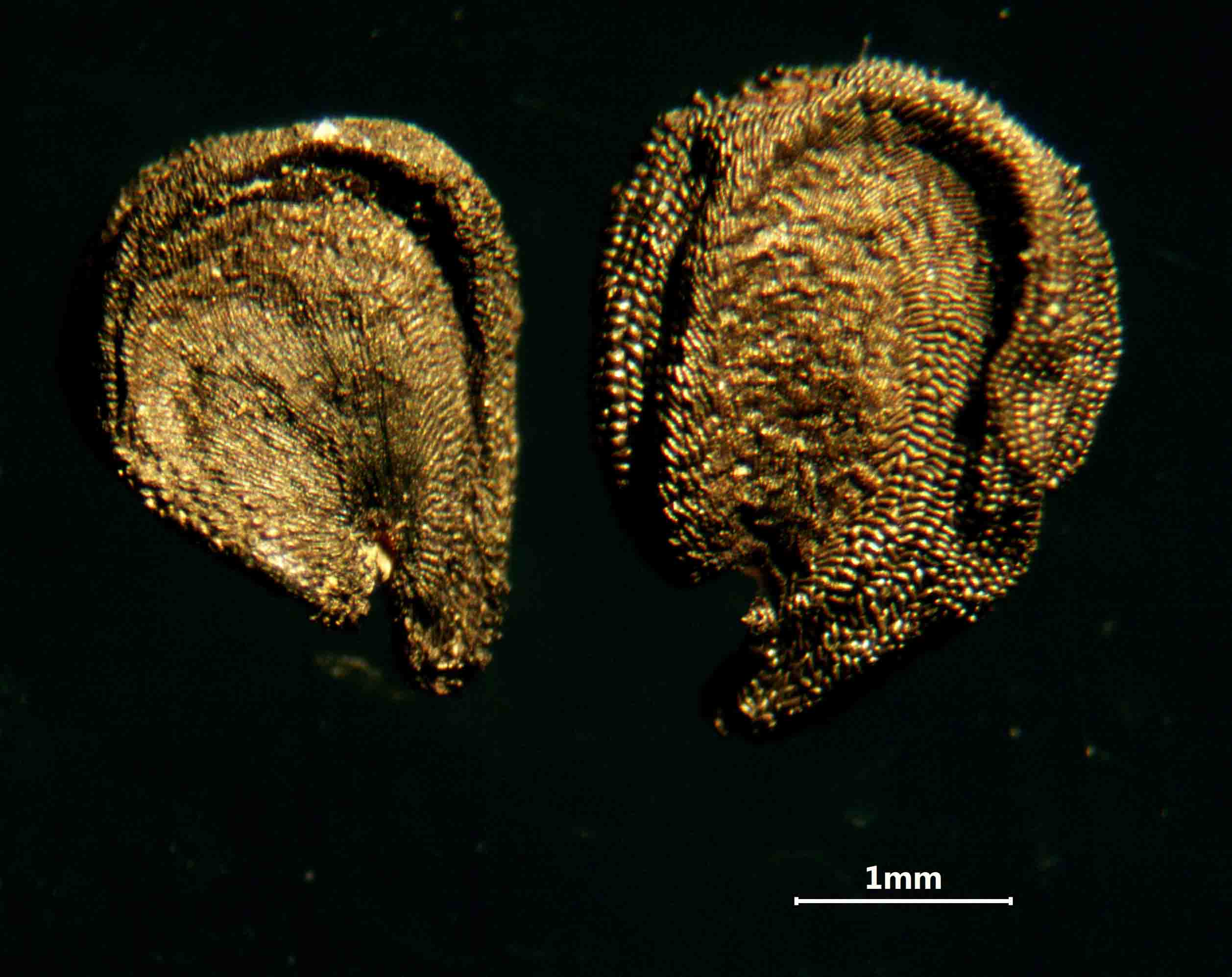
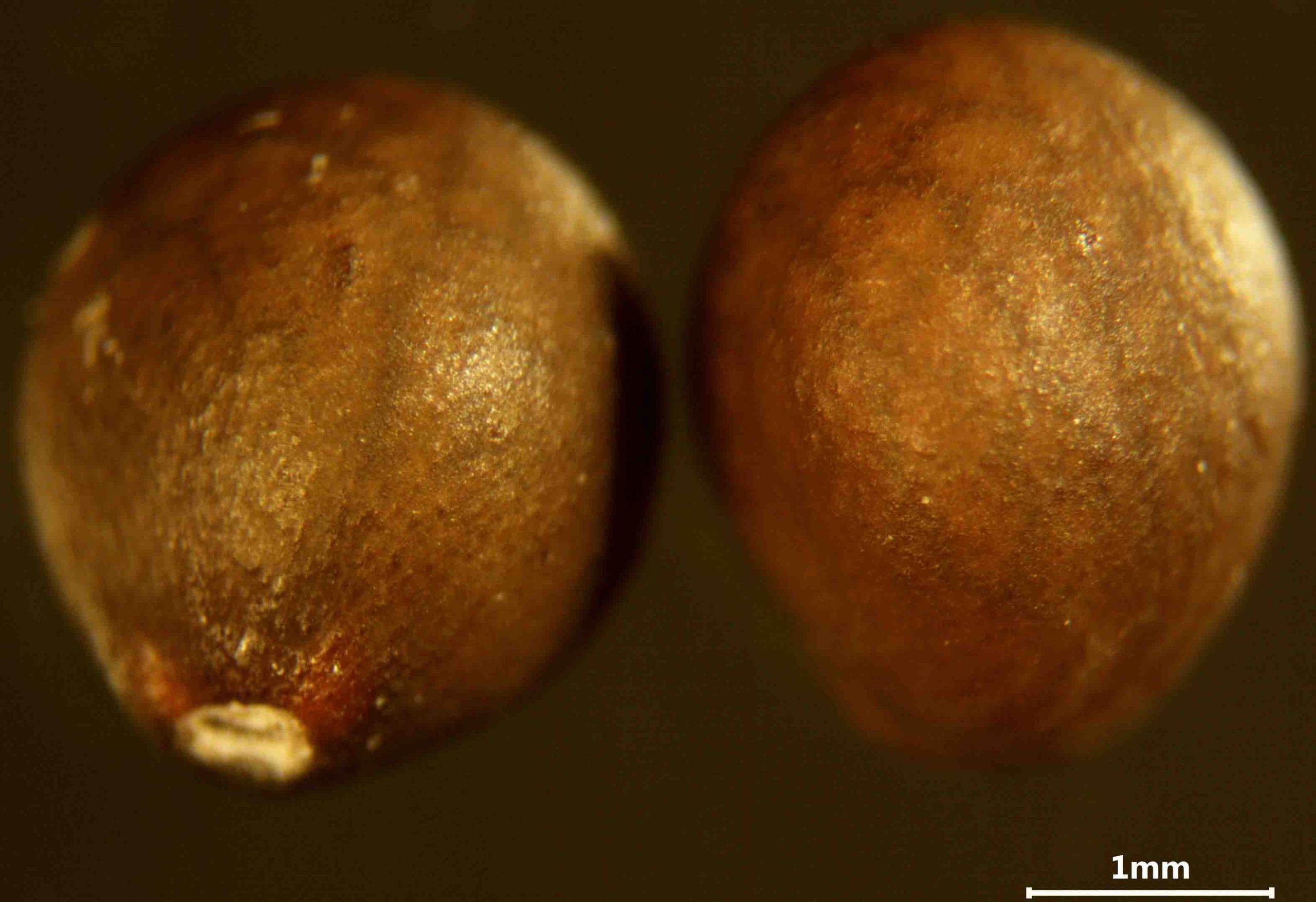
Seed: asymmetrical, reniform, surface glabrous, dorsal side convex, ventral side concave, hilum round, slightly lustrous, pale-brown with brown spots.
Seed size: Length: 3.56-3.81mm, width: 2.21-2.99 mm in an accession from Bejnourd, Khorasan with 1000 seeds weight 12.3 g, which was collected in 2009 by Ali Akbar Ameri, and the cultivated sample was identified by S. Reza Safavi with voucher number 105665.
1000 seed weight: 11.7-12.3 g.
Biological features
Life form: Erect with stem without splits or with more splits in the base, height 10-40 cm.
Florescence, flower type, and pollination mechanism: Florescence racemes, 6-7 flowers, peduncle 2-4 cm. Flowers hermaphrodite, 5-merous, zygomorphic, calyx campanulate or tubular, corolla purple or pink. Plant monoecious, cross-pollinate. Pollination is carried out by insects and wind.
Time of flowering: April to June
Time of seed ripening: June to July
Seed dispersal methods: The seeds are displaced by the weight
Geographical distribution: Iran, Central Asia, and Afghanistan. Typus from Turkmenistan.Distribution in Iran: North East, North, North West and Center. Golestan, Azerbaijan, Khorasan and Tehran
Taxonomy
Family: Papilionaceae
Genus: Astragalus
Species: schmalhausenii
Common name: Locoweed
References and Links
Baskin, C.C. and Baskin, J.M.1998. Seeds: Ecology, Biogeography, Evolution of Dormancy and Germination. Academic Press, San Diego.
Bewley, J.D. 1997. Seed germination and dormancy. The plant cell, 9: 1055-1066.
Bakhshandeh Faraj-pur, A. 2014. Investigating the possibility of increasing the germination of several species (Astragalus) using various methods of dormancy in order to multiply massive and regenerate rangelands. Master’s thesis, University of Kashan, Faculty of Engineering.
Kožuharova, E. and Firmage, D. 2007. On The Pollination Ecology of Astragalus alopecurus Pallas (Fabaceae) in Bulgaria. Tome, 60(8): 863-870.
Kožuharova, E., Tzvetanova, V. and Firmage, D. 2010. Seed germination and seedling development of two rare Astragalus species (Fabaceae). Phytologia Balcanica, 16 (1): 51-56.
Maassoumi, A.A. 2018. Flora of Iran, No.43: (Papilionaceae: Astragalus I). Research Institute of Forests and Rangelands Publication, p. 260.
Mozaffarian, V. 2012. A Pictorial Dictionary of Botany. Farhange Moaser publisher, 1088 pp.