
 Author: آمنه غلامی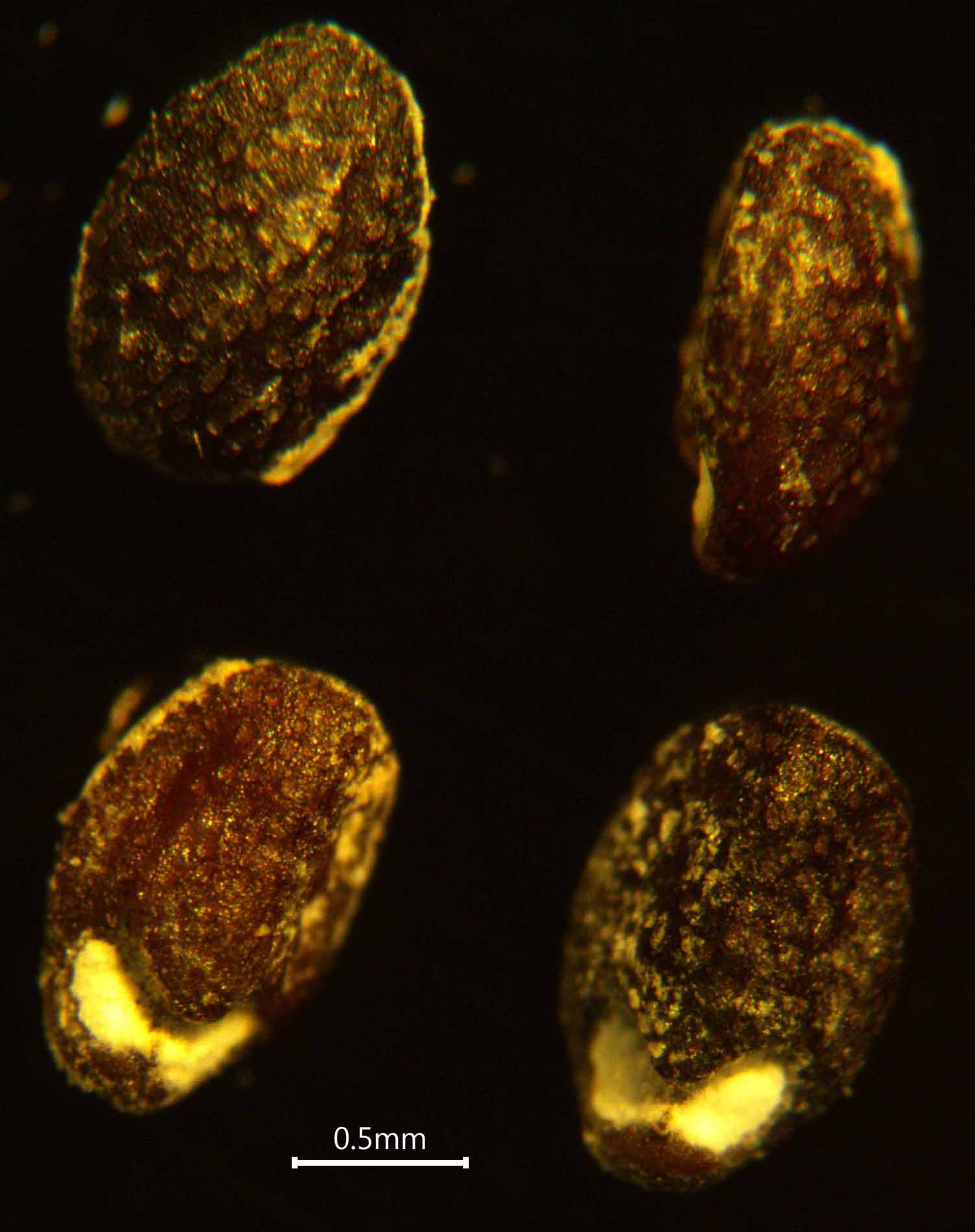
Nepeta meyeri Benth.
Parvin Salehi Shanjani, Masoumeh Ramezani Yeganeh and Mohammad Reza Pahlevani
Natural Resources Gene Bank, Research Institute of Forests and Rangelands, Agricultural Research, Education and Extension Organization, Tehran, Iran.
Uploaded at Dec 2023
Scientific editor: Masoumeh Izadpanah
This Seed ID was supported by the Headquarters of Science and Technology of Medicinal Plants and Traditional Medicine
Seed Storage
The storage behavior of this species is orthodox (desiccation-tolerant seeds); dry to 15-20 % eRH and stored at -20 °C.
Germination requirements
The seeds of this species show non-deep dormancy. Sterilize seeds before placing them on wet germination paper. Then germinate under an alternating temperature regime of 15/25 ºC (the higher temperature for 16 hours of light and the lower one for 8 hours of dark).
Morphology
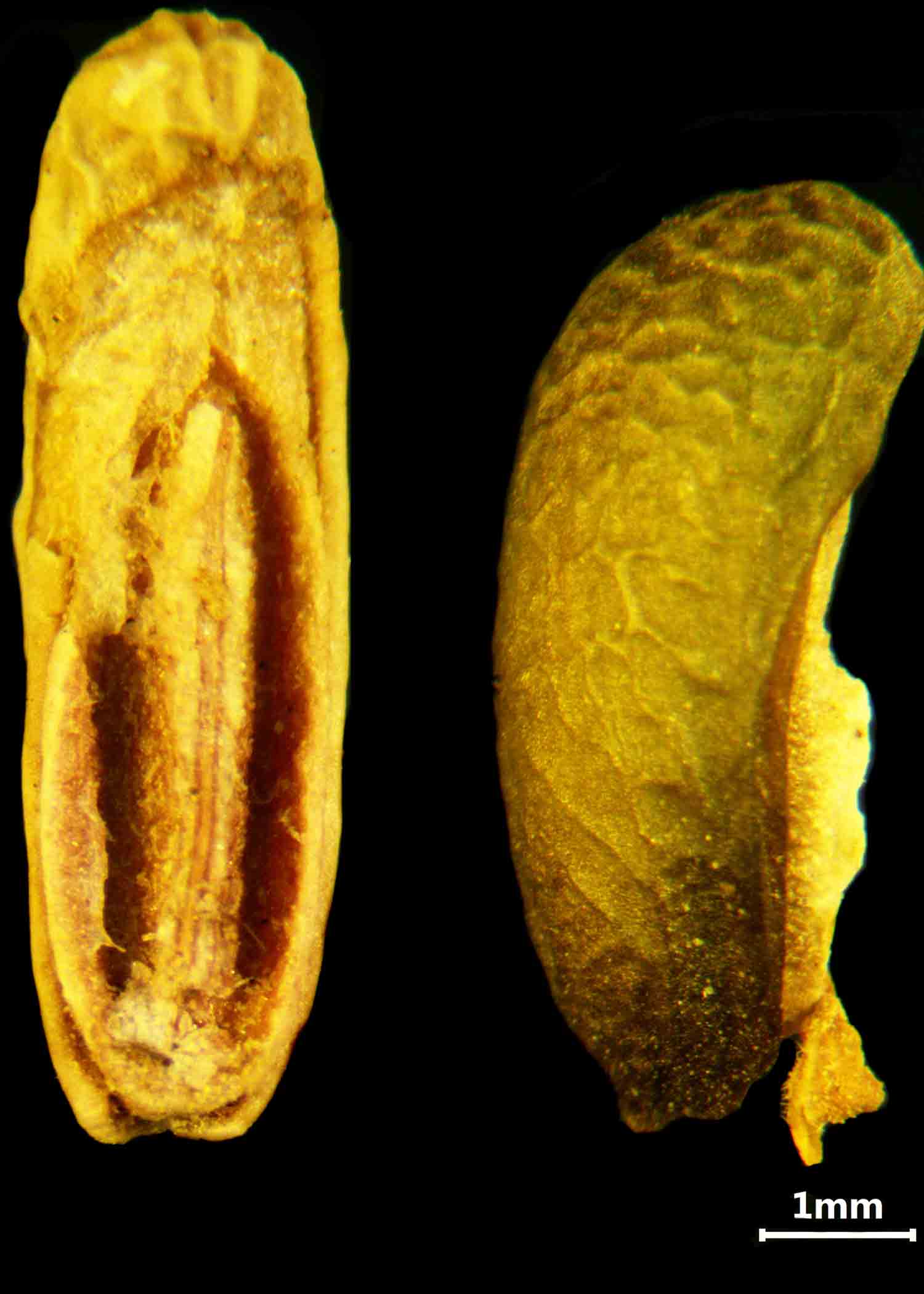
Fruit/seed: Achene
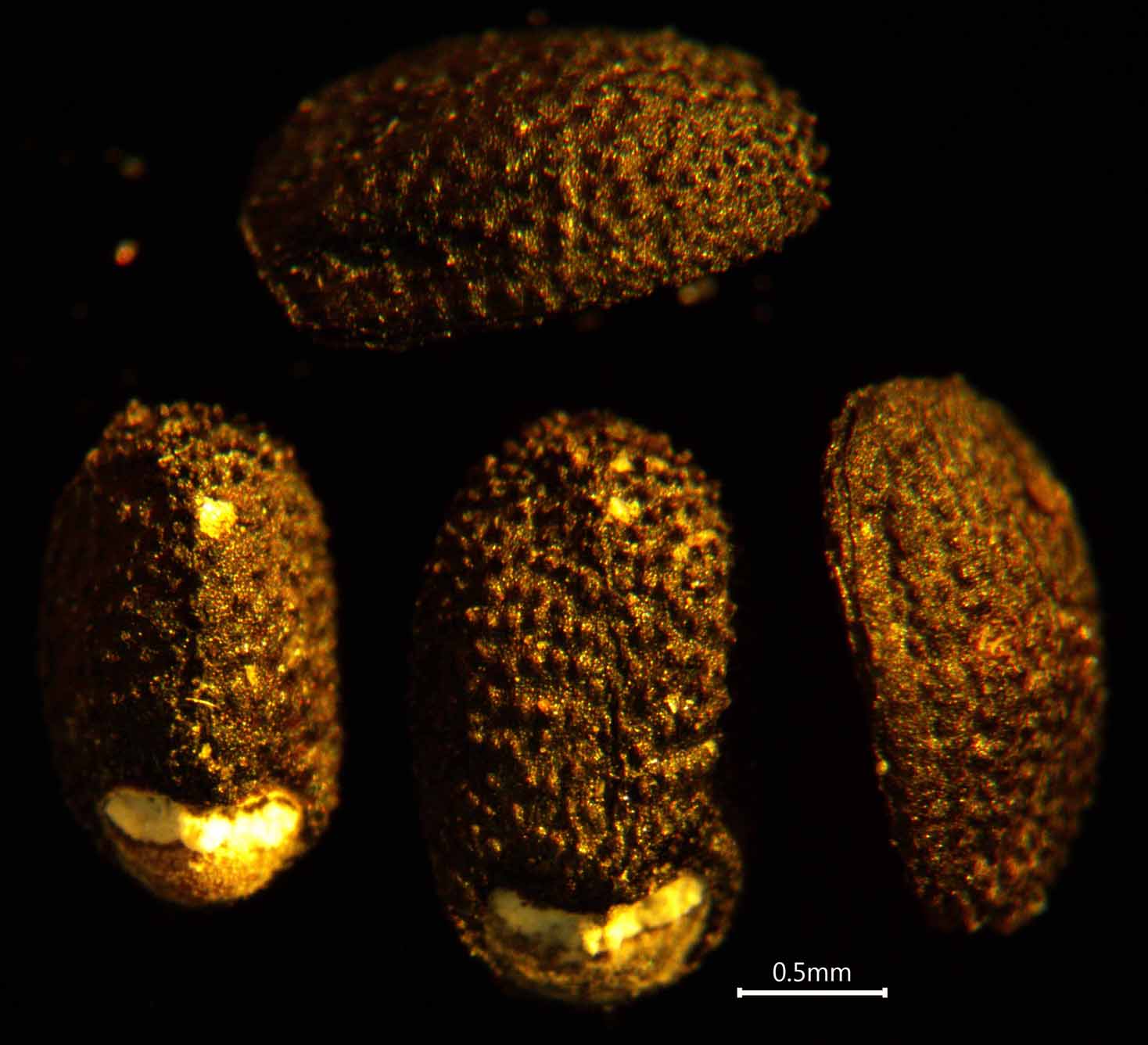
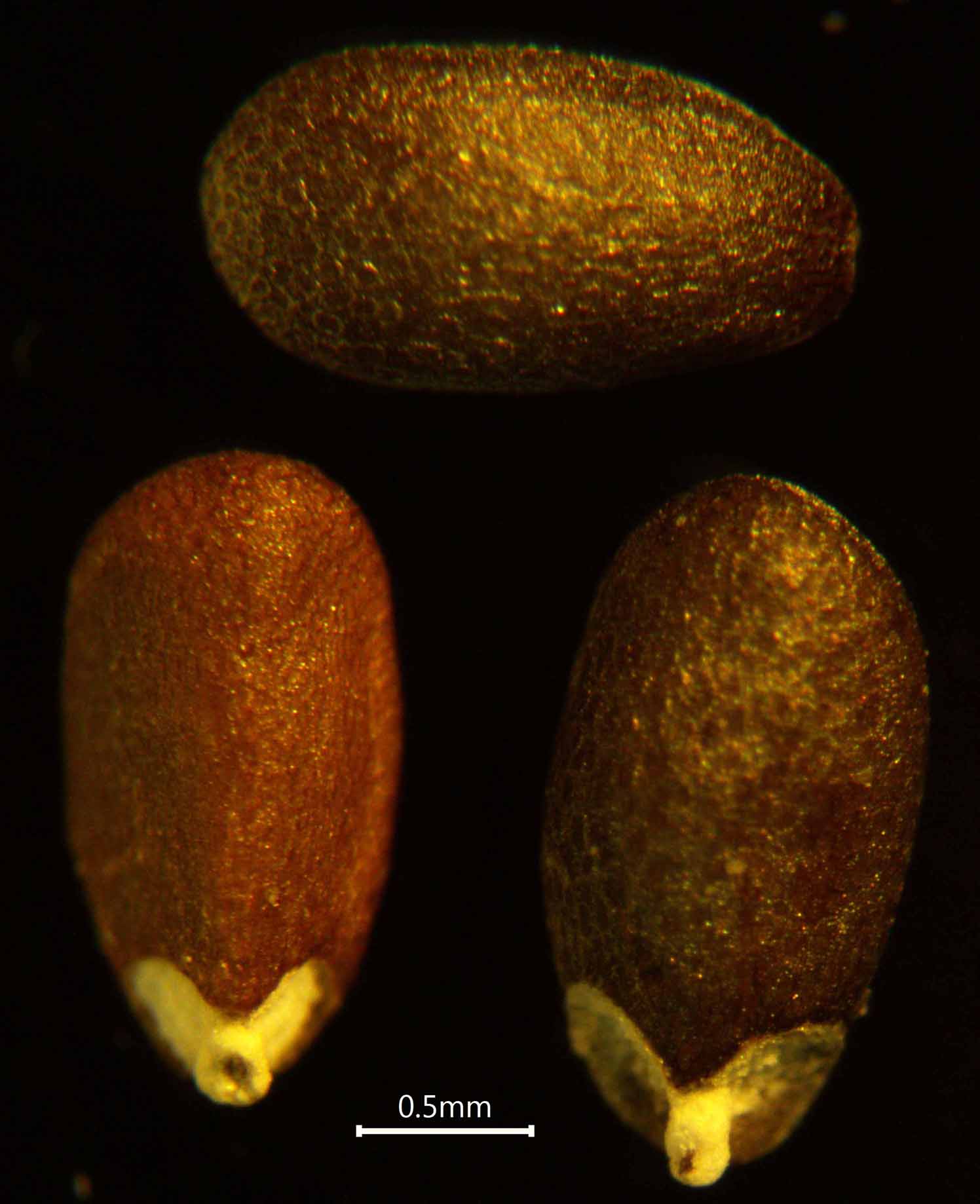
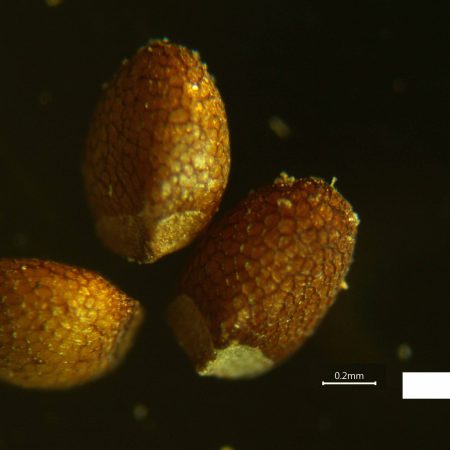
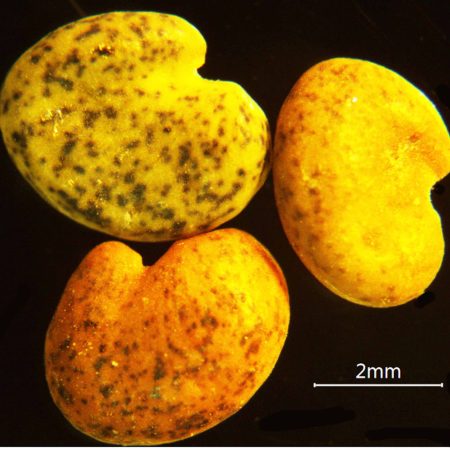
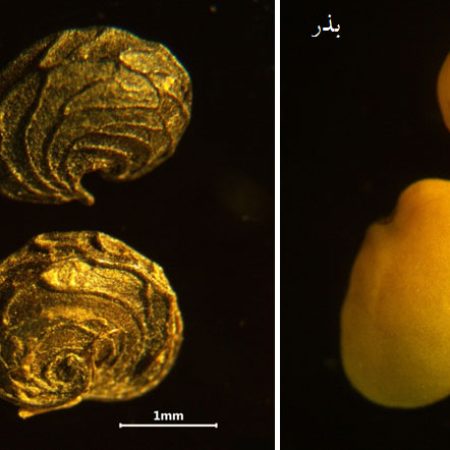
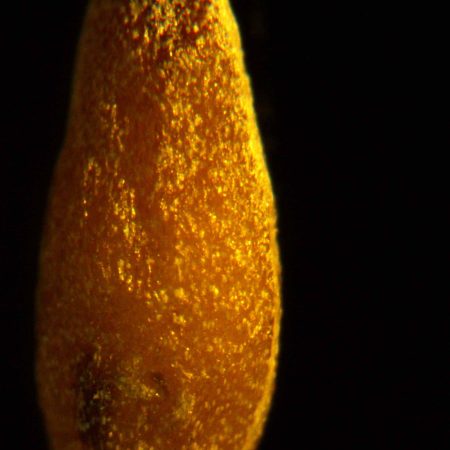
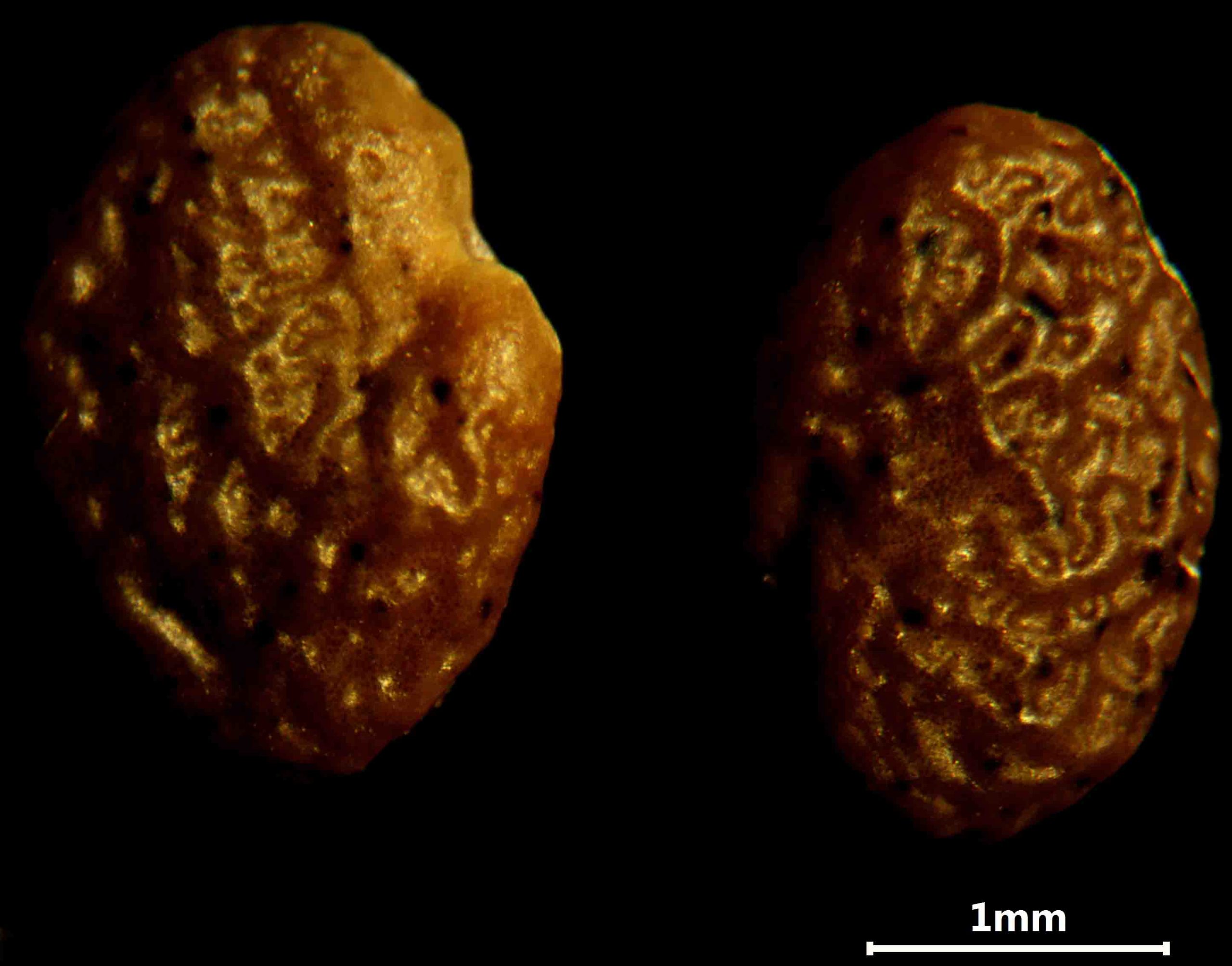
Fruit/seed shape: Achenes oblong-ellipsoid, areole lateral bi-lobed, surface with small rounded tubercles, brown.
Fruit/seed size: Length 0.64-0.75 mm, and width 0.48-0.59 mm in an accession from Bushehr with 1000 seed/fruit weight 0.25 g, which was collected, and identified by Fateme Gholamian in 2014 with an accession number 46271.
Average 1000 seed/fruit weight: 0.17-0.2 g
Biological features
Life form: Annual, herbaceous, stem erect, unbranched or branched from base
Inflorescence, flower type, and pollination mechanisms: Inflorescence long pedunculate cymes. Flowers hermaphrodite, zygomorphic, corolla blue or withe, 6-10 mm long. Plant monoecious, cross-pollinated. Pollination is carried out by insects, especially bees.
Flowering Period: Spring
Time of seed ripening: Summer
Seed dispersal methods: Seed weight
Geographical distribution: Turkey, Iran, and Caucasus. Typus from Talesh, Iran
Geographical distribution in Iran: North West and center Azarbaijan, Hamedan, Esfahan, Kerman, Yazd, Khorasan, Semnan, and Tehran
Taxonomy
Family: Lamiaceae
Subfamily: Nepetoideae
Genus: Nepeta
Species: meyeri
Persian name: Punehsa-e-Azari
References and Links
Bojňanský, V. and Fargašová, A. 2007. Atlas of seeds and fruits of central and East-European flora: the region of the Carpathian Mountains. Springer, Dordrecht, the Netherlands, 1046 pp.
Ghahraman, A. Flore of Iran. Research Institute of Forests and Rangelands with the university of Tehran publication. https://floraofiran.net/index.php.
Harrington, J.F. 1972. Seed storage and longevity. In: T. Kozlowski (ed.). Seed Biology. Vol. III. Academic Press, New York, p 145-245.
Hassan, T. and Dar, G.H. 2012. Nutlet micromorphology in selected species of Nepeta L. (Lamiaceae) in Kashmir Himalaya. Iranian Journal of Botany, 2: 262-269.
Jamzad, Z. 1391. Flora of Iran, No. 76: Lamiaceae. Agricultural Research, Education and Promotion Organization, Research Institute for Forests and Rangelands of Iran, Tehran, 1066 p.
Jamzad, Z., Ingrouille, M. and Simmonds, M. 2003. Three new species of Nepeta (Lamiaceae) from Iran. Taxon, 52: 93-98.
Kaya, A. and Dirmenci, T. 2008. Nutlet surface micromorphology of the genus Nepeta L. (Lamiaceae) in Turkey. Turkish Journal of Botany, 32.103-112.
Mozaffarian, V. 2012. A Pictorial Dictionary of Botany. Farhang Moaser publisher, 1088 pp.
Mozaffarian, V.A. 1998. Dictionary of Iranian Plants Names. Moaser Publisher, Tehran Farhang, 671 pp.
Naghibi, F. 2005. Labiatae family in folk medicine in Iran from ethnobotany to pharmacology. Iranian Journal of Pharmaceutical Research, 2: 63-79.
Sharma, O.P. 2009. Plant taxonomy 2E. Tata McGraw-Hill Education, New Delhi, 563 pp.