
 Author: navidcod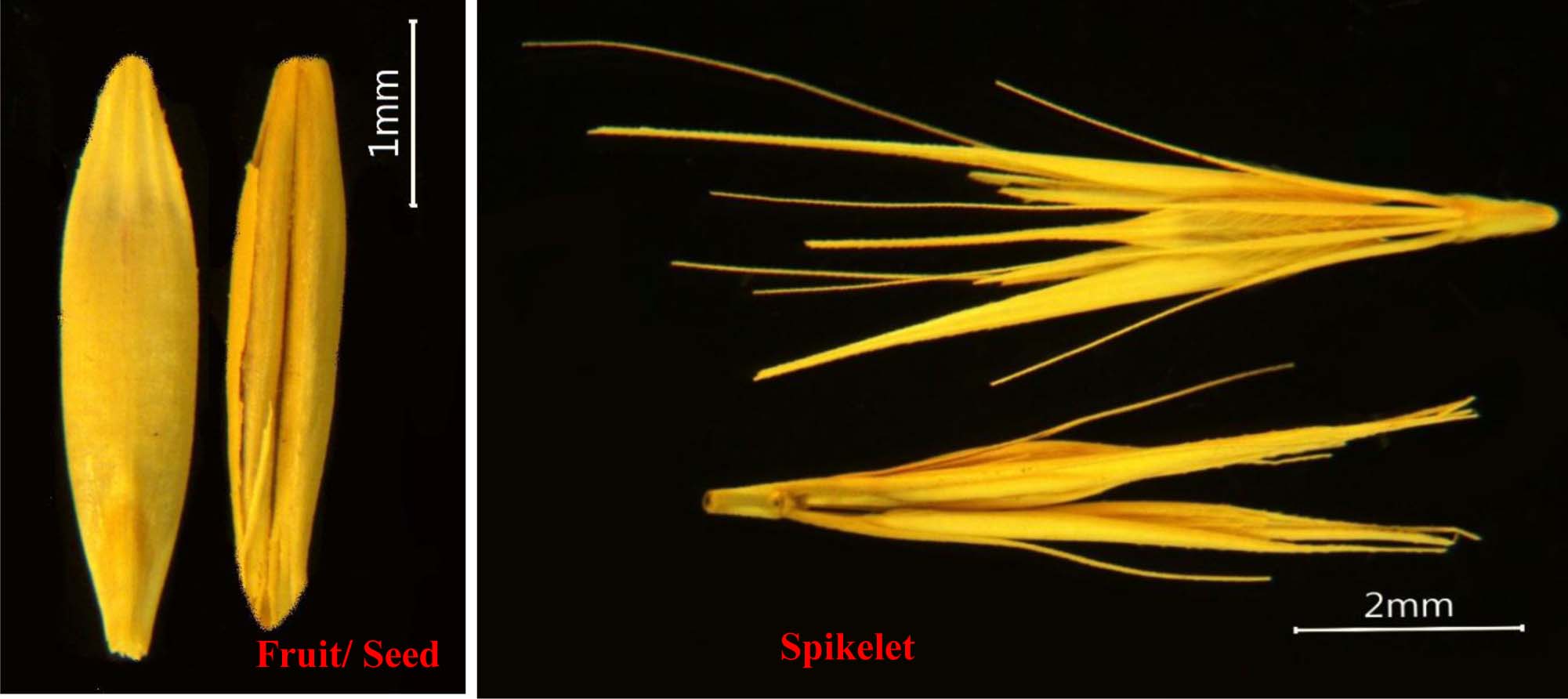
Hordeum leporinum Link
Hamideh Javadi, Parvin Salehi Shanjani, Behnam Hamzeh’ee and Seyed Esmael Seyedian
Natural Resources Gene Bank, Research Institute of Forests and Rangelands, Agricultural Research, Education and Extension Organization, Tehran, Iran.
Uploaded at June 2022
Scientific editor: Masoumeh Izadpanah
Seed Storage
Storage behavior of this species is orthodox (desiccation-tolerant seeds); dry to 15-20% eRH and store at -20°C.
Germination requirements
Seeds do not have physiological and physical dormancy and are easily able to germinate. Place seeds between-paper in 5-10 Cº for 5 days to germinate uniformly. Then germinate at constant temperature of 20 Cº and 8/16 hr. photoperiod.
Morphology
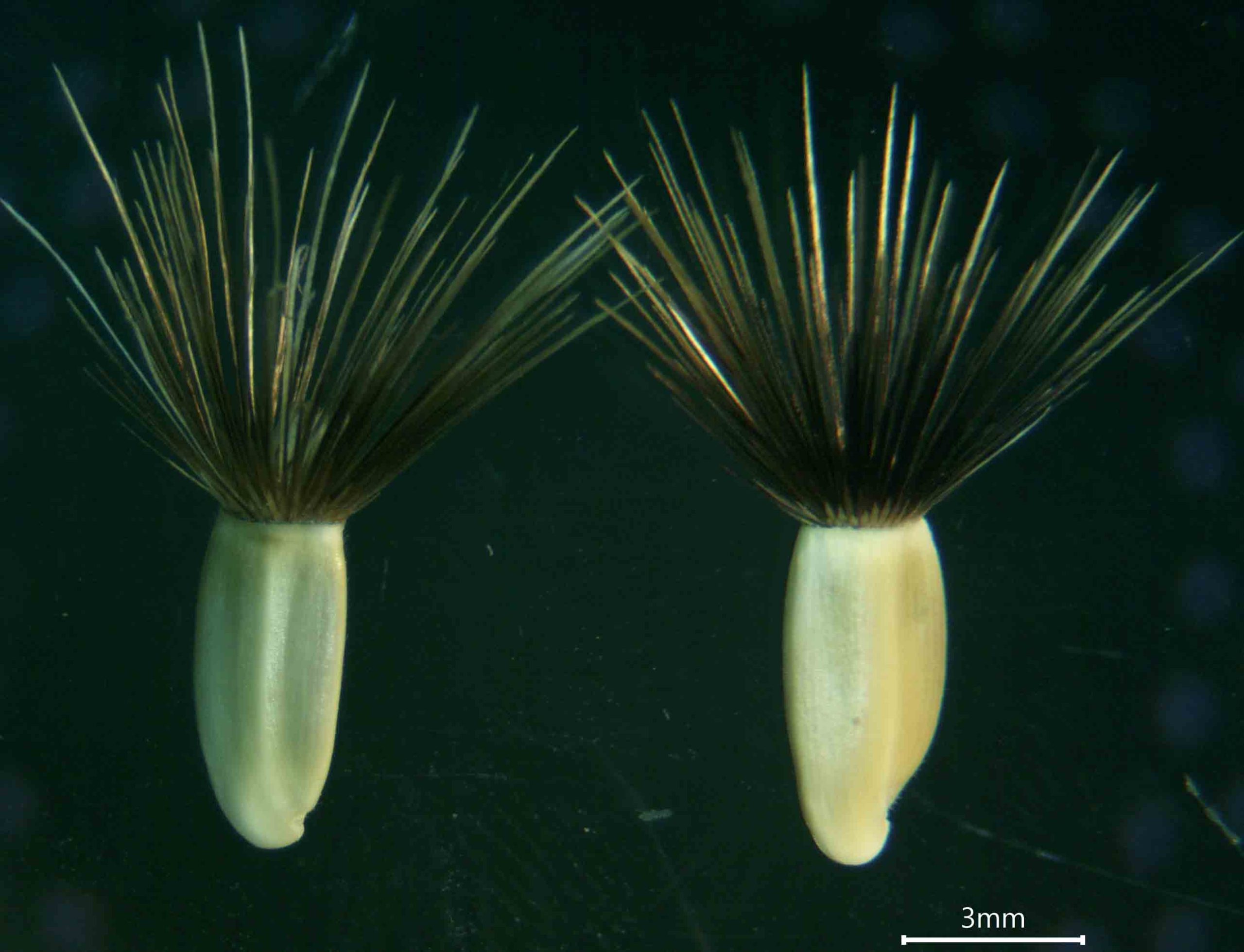
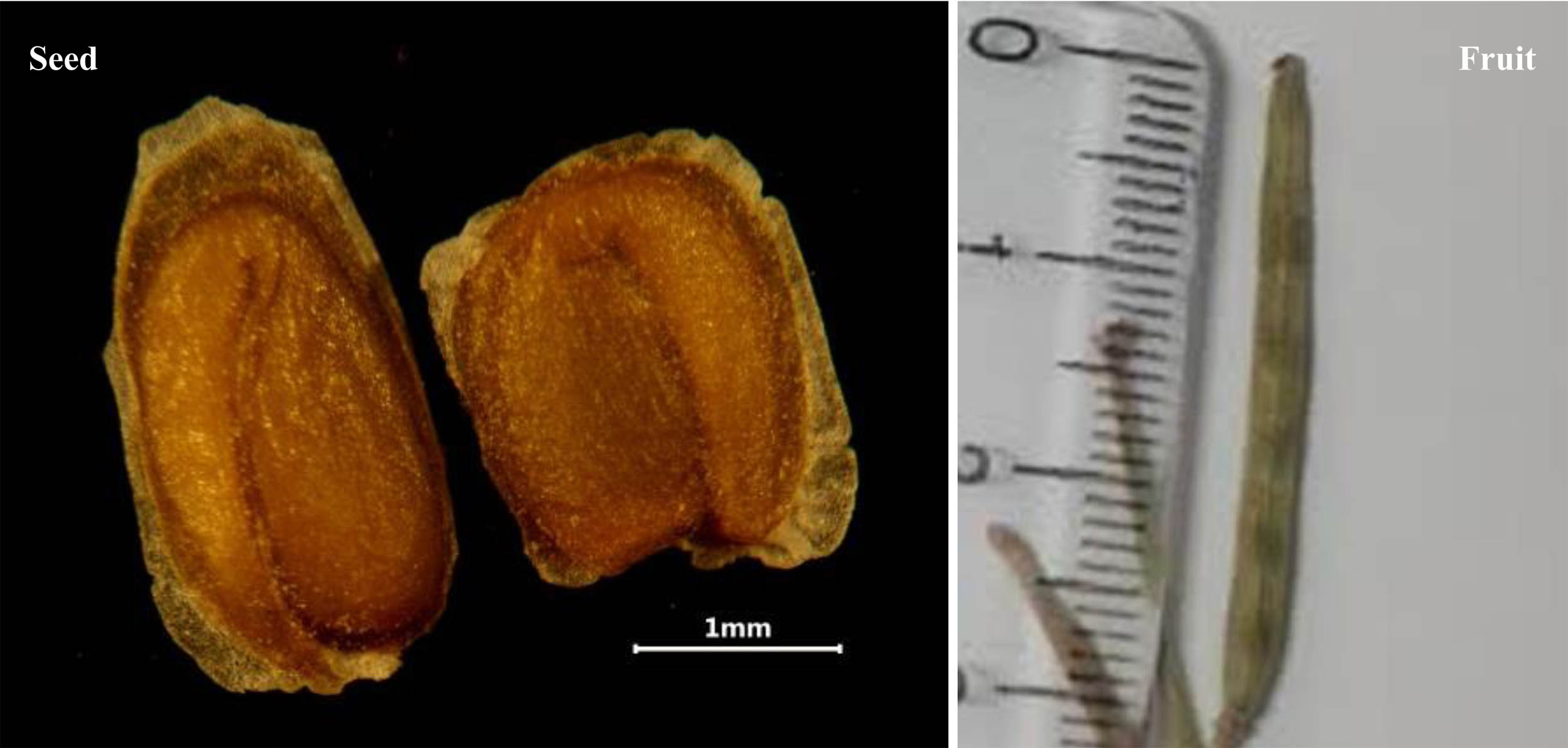
Fruit type: Caryopses
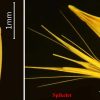
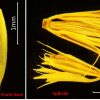
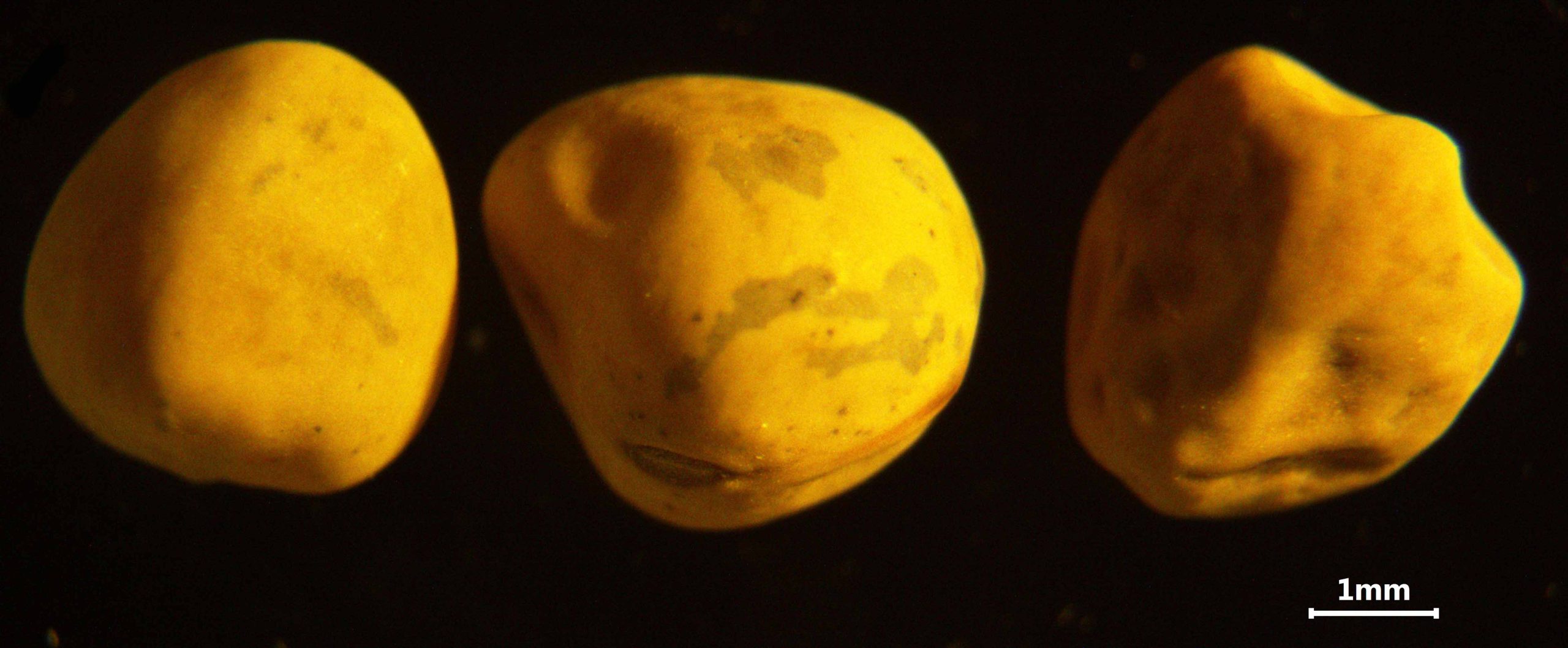
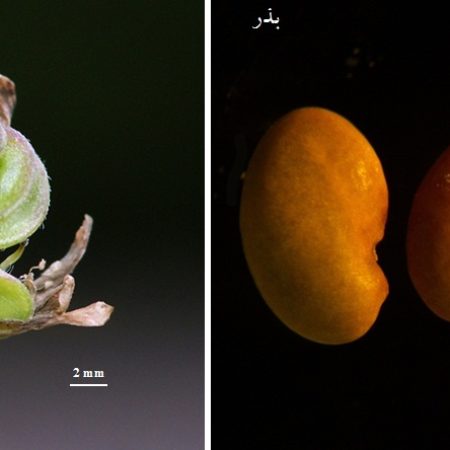
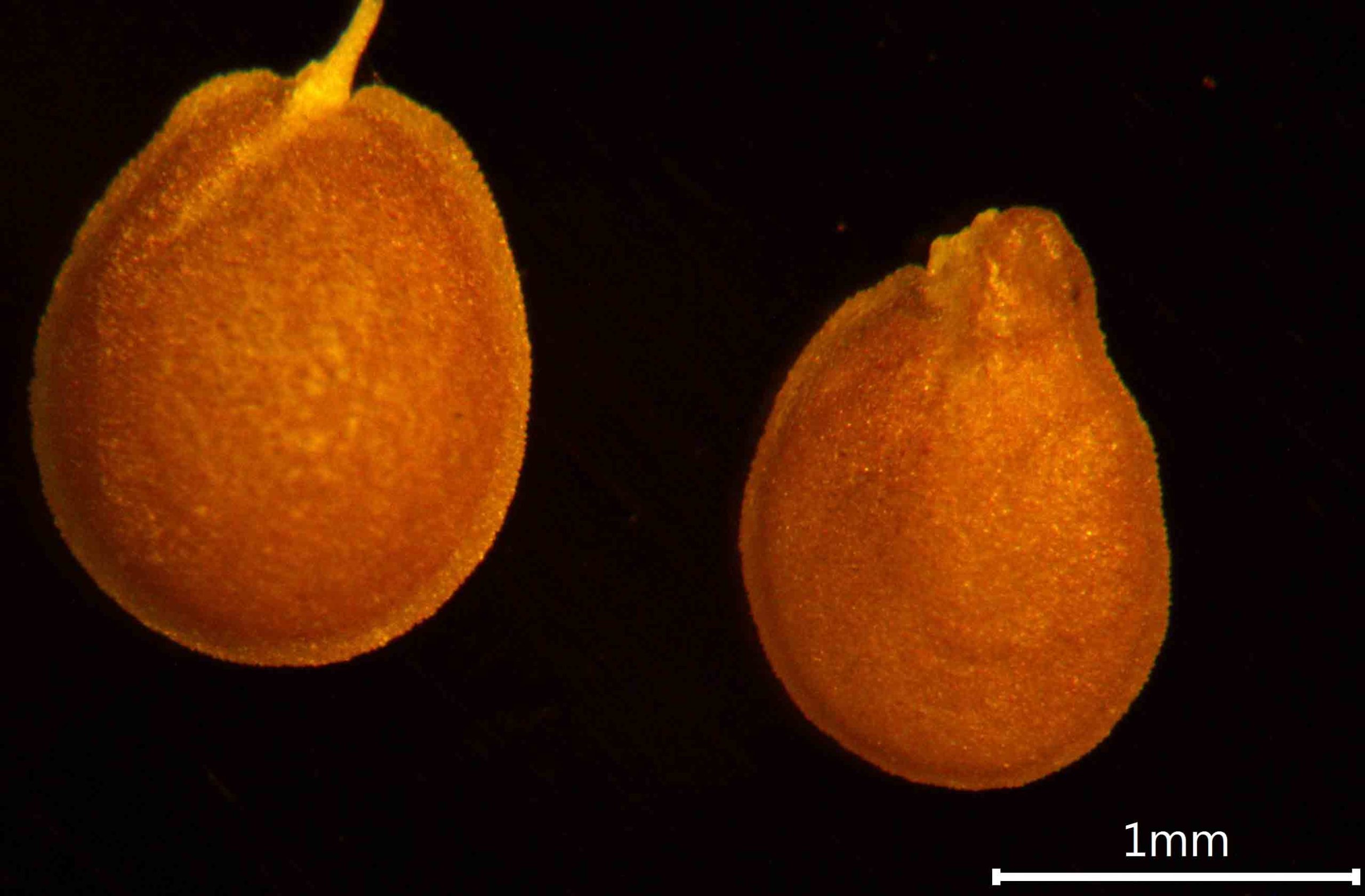
Fruit/seed shape: Caryopses obovoid or cylindric, dorsal and ventral sides convex, ventral side longitudinally furrowed, surface smooth, lusterless and white.
Fruit/seed size: length 4.7 to 5.61 mm, width 1.58 to 1.98 mm in an accession with 1000 fruit/seeds weight 3.2 g., which was collected by Darvishiyan from Khoramabad, Lorestan in 2007 and the cultivated sample was identified by Behnam Hamzeh’ee with accession number 27939.
Average 1000 fruit/seed weight: 3.2 to 10.3 g.
Biological features
Life form: Annual herb, 10-40 cm high, extremely like H. glaucum in habit and vegetative characters. It differs, however in the looser inflorescence, the larger anthers, and in the shorter and more slender prolongation of the rhachilla of the lateral spikelets. As in H. glaucum the floret of the central spikelet is stipitate, surface smooth, matt, straw-coloured.
Inflorescences, flower type and pollination mechanism: Spike slender with arista up to 10 cm. long, green rarely purple, spikelet triplet, inner glum spear-linear, outer with arista, arista 1.5-4 cm long. Pollination is carried out by wind (anemophily).
Time of flowering: May
Time of seed ripening: May-June
Seed dispersal methods: Wind and livestock
Geographical distribution: Mediterranean Region, South of Russia, Anatolia, Cyprus, Syria, Lebanon, Palestine, Iraq, Iran, Afghanistan, Pakistan, North-western of India, Caucasus and Turkmenistan, Dsongaro-Tarbagatai; introduced in Scandinavia and in north America. Typus from Greece
Distribution in Iran: North, North-West, West, South, East and Center. Mostly in Gorgan, Mazandaran, Gilan, Azerbaijan, Kordestan, Lorestan, Hamadan, Fars, Kerman, Hormozgan, Khorasan, Khozestan and Tehran provinces
Taxonomy
Family: Gramineae
Genus: Hordeum
Species: leporinum
Common name: Barley
References and Links
Mozaffarian, V. 2006. A Dictionary of Iranian plant names. Latin-English-Persian. Farhang Moaser Publishers, 671 pp.
Dinarvand, M. 2020. Flor of Khozestan. Research Institute of Forests and Rangelands publishers, 814 pp.
http://floranorthamerica.org/Hordeum
Rechinger, K.H. 1970. Flora Iranica. Akademische Druck- und Verlagsanstalt Graz Publishers, No.70, P. 239.
Javadi, H. 2021. Seed: Processing and Quality tests. Agricultural Education & Extension Publishers, 175 pp.
Vít Bojnanský and Agáta Fargašová, 2007. Atlas of Seeds and Fruits of Central and East-European flora. Published by Springer, P.O. Box 17, 3300 AA Dordrecht, The Netherlands. P. 889.
Townsend, C.C., Guest, E. and Al-Rawi, A. 1968. Flora of Iraq. Gramineae, vol. 9: 244 pp. Published by the Ministry of Agriculture of the Republic of Iraq.