
 Author: آمنه غلامی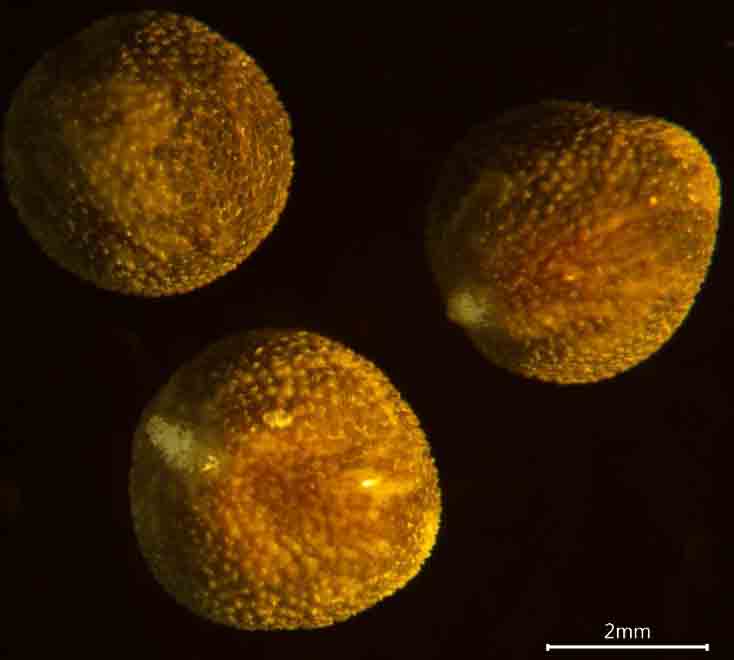
Lathyrus cassius Boiss
Parvin Salehi Shanjani, Leila Rasoulzadeh and Mustafa Nemati Pikan
Natural Resources Gene Bank, Research Institute of Forests and Rangelands, Agricultural Research, Education and Extension Organization, Tehran, Iran.
Uploaded at Dec 2023
Scientific editor: Masoumeh Izadpanah
Seed Storage
The storage behavior of this species is orthodox (desiccation-tolerant seeds); dry to 15-20% eRH and store at -20 °C.
Germination requirements
The seeds of this species are not dormant. Sterilize seeds before placing them on wet germination paper. Place seeds two weeks in 4 ºC to germinate uniformly. Then germinate under an alternating temperature regime of 15/20 ºC (the higher temperature for 16 hours in light and the lower one for eight hours in dark).
Morphology
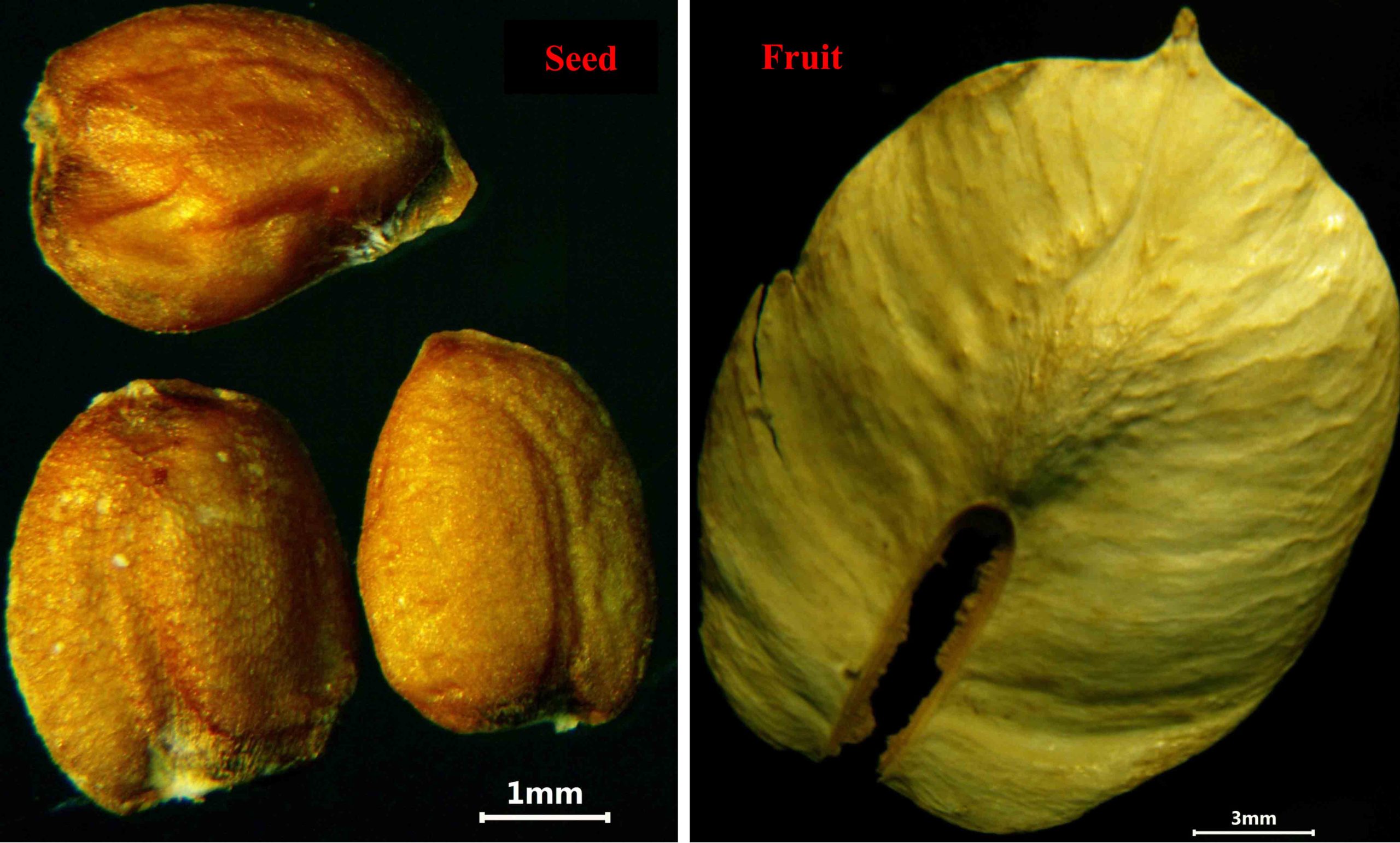
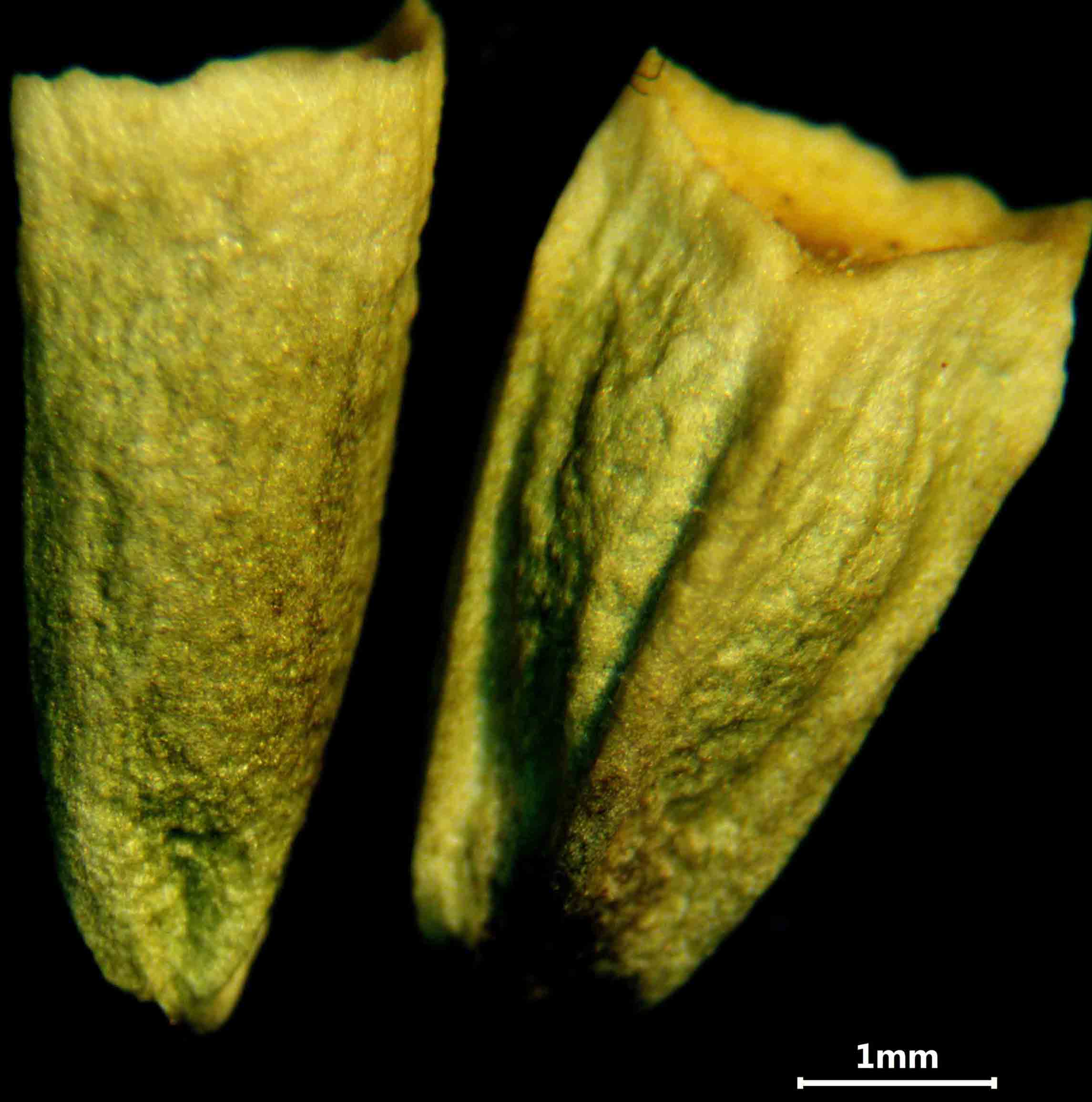
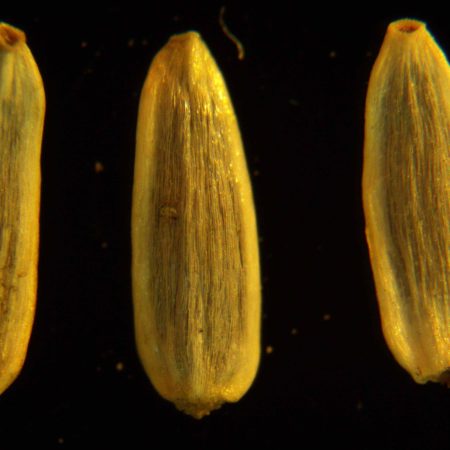
Fruit: Pod, narrowly oblong, compressed, net veined; 30 to 35 mm long and 5 to 7 mm wide, with 4 to 6 seeds per pod
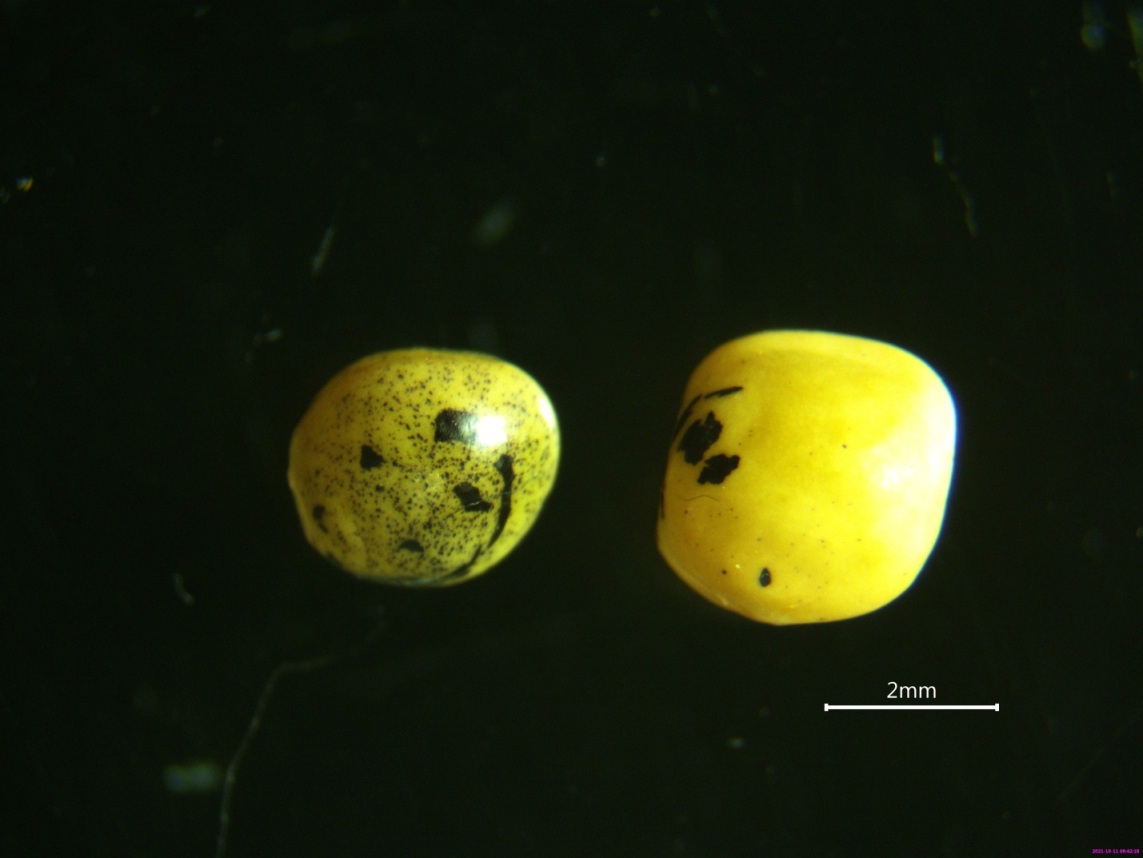
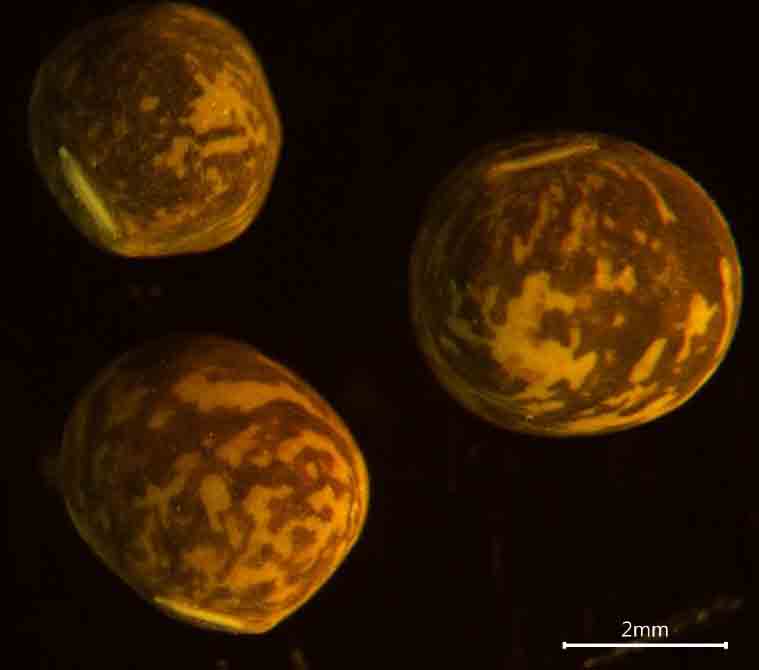
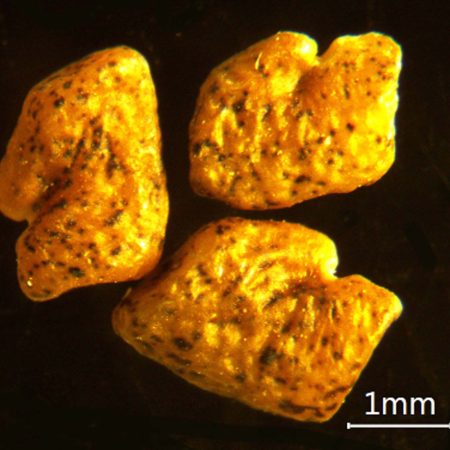
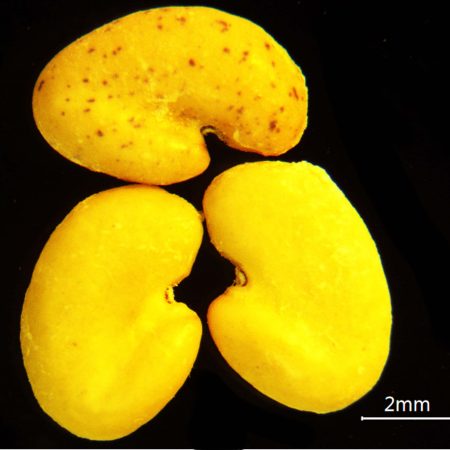
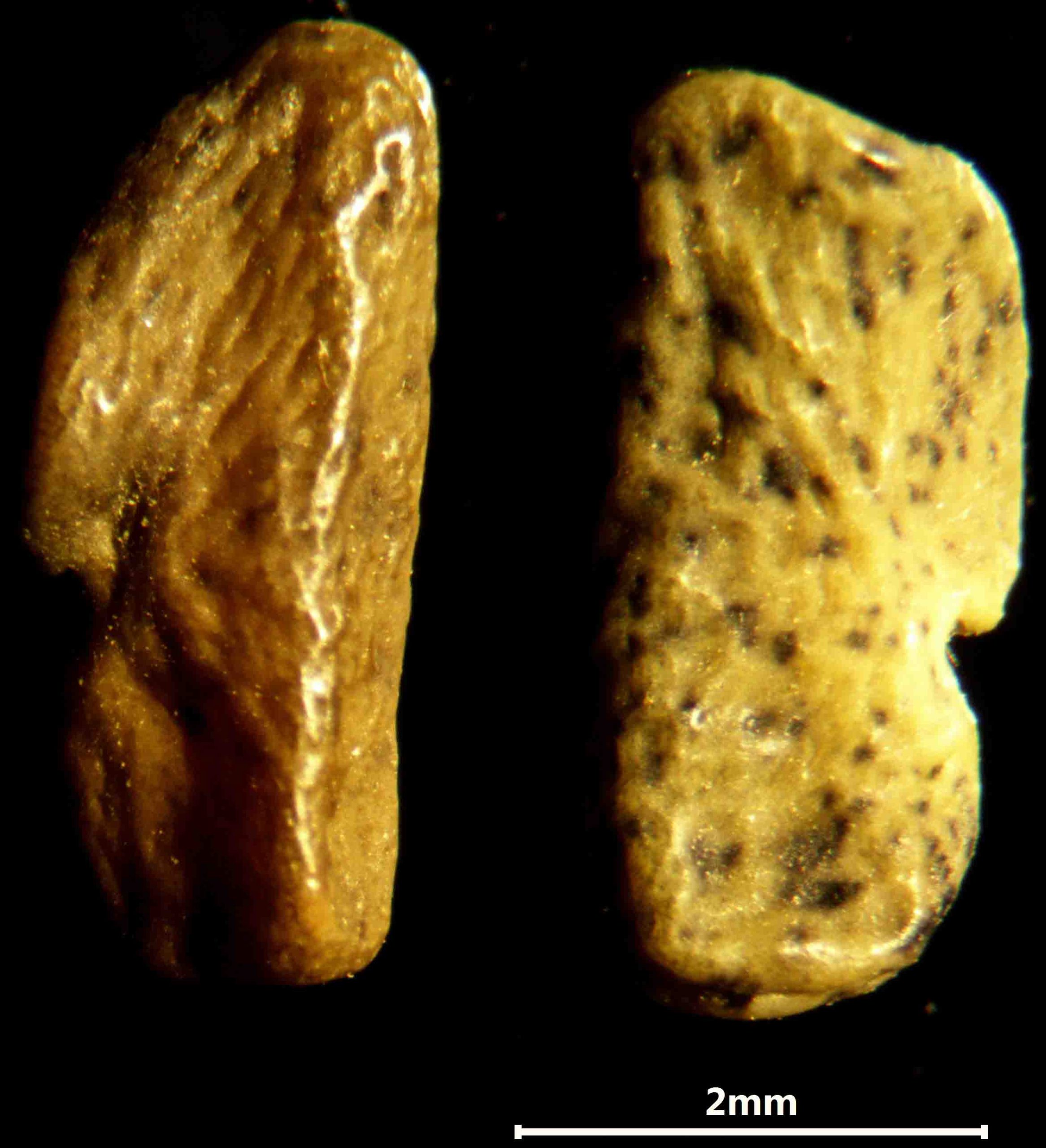
Seed: Ellipsoid to globose, hilum elliptic to obovate. Surface tuberculate, dull, dark purple brown to black (in old seeds), sometimes spotted
Seed size: Length 2.7 to 3.5 mm, width 2.5 to 3.6 mm in an accession from Kohkiluyeh and Boyer-Ahmad with 1000 seeds weight 30.9 g, which was collected in 2001 by Shahabuddin Mirinejad and the cultivated sample was identified by Mostafa Nemati, and is stored in the Natural Resources Gene Bank of Iran with the accession number 7190.
1000 seed weight: 15-38 g
Biological features
Life form: Annual. Stem erect-ascending, 30 to 90 cm height
Inflorescences and flower type and pollination mechanisms: Inflorescence axillary 1- or 2-flowered, peduncles are the same length or longer than the accompanying leaves. Flowers hermaphrodite, zygomorphic, heteropetalous; corolla (composed of banner: uper large petal, wings: two petals adjacent to the banner, and keel: two bottom petals) pink, in the dried state yellowish green, wings longer than the keel; stamens are always ten in number, and their filaments are fused in a group of nine stamens plus one separate stamen (9+1). Plant monoecious, cross-pollinated, which is carried out by insects.
Time of flowering: May to June
Time of seed ripening: June to July
Seed dispersal methods: The seeds are displaced by weight.
Geographical distribution: Turkey, Iran, Iraq Syria, Lobnan and Palestin. Typus from Syria.
Distribution in Iran: Iran-Turani ecological zone. Mostly in provinces Lorestan, East Azerbaijan, Kohgiluyeh and Boyer-Ahmad, Chaharmahaal and Bakhtiari and Fars
Taxonomy
Family: Papilionaceae
Genus: Lathyrus
Species: L. cassius
Persian name: Kholar-e suri
References and Links
Bojňanský, V. and Fargašová, A. 2007. Atlas of seeds and fruits of central and East-European flora: the Carpathian Mountains region. Springer, Dordrecht, The Netherlands, 1046 pp.
Campbell, C. G. 1997. Grass pea. Lathyrus sativus L. Promoting the conservation and use of underutilized and neglected crops. International Plant Genetic Resources Institute, Rome, Italy.
Ghahraman, A. Flore of Iran. Research Institute of Forests and Rangelands with University of Tehran Publication. https://floraofiran.net/index.php.
Mozaffarian, V. 2012. A Pictorial Dictionary of Botany. Farhange Moaser publisher, 1088 pp.
Mozaffarian, V.A. 1998. Dictionary of Iranian Plants Names. Moaser Publisher, Tehran Farhang, 671 pp.
Pakravan, M., Jalilian, N. and Neamati, M. 1379. Flore of Iran, Papilionaceae: Vicieae. Research Institute of Forests and Rangelands, Tehran, Iran, Publication No. 33, 176 pp.
Sharma, O.P. 2009. Plant taxonomy 2E. Tata McGraw-Hill Education, New Delhi, 563 pp.